
Last updated September 20, 2026
Full 25-point door and opener safety check with every visit - springs, cables, rollers, tracks, and your LiftMaster or Chamberlain opener included
You get a price before we start. It does not change when the truck arrives.
 Before
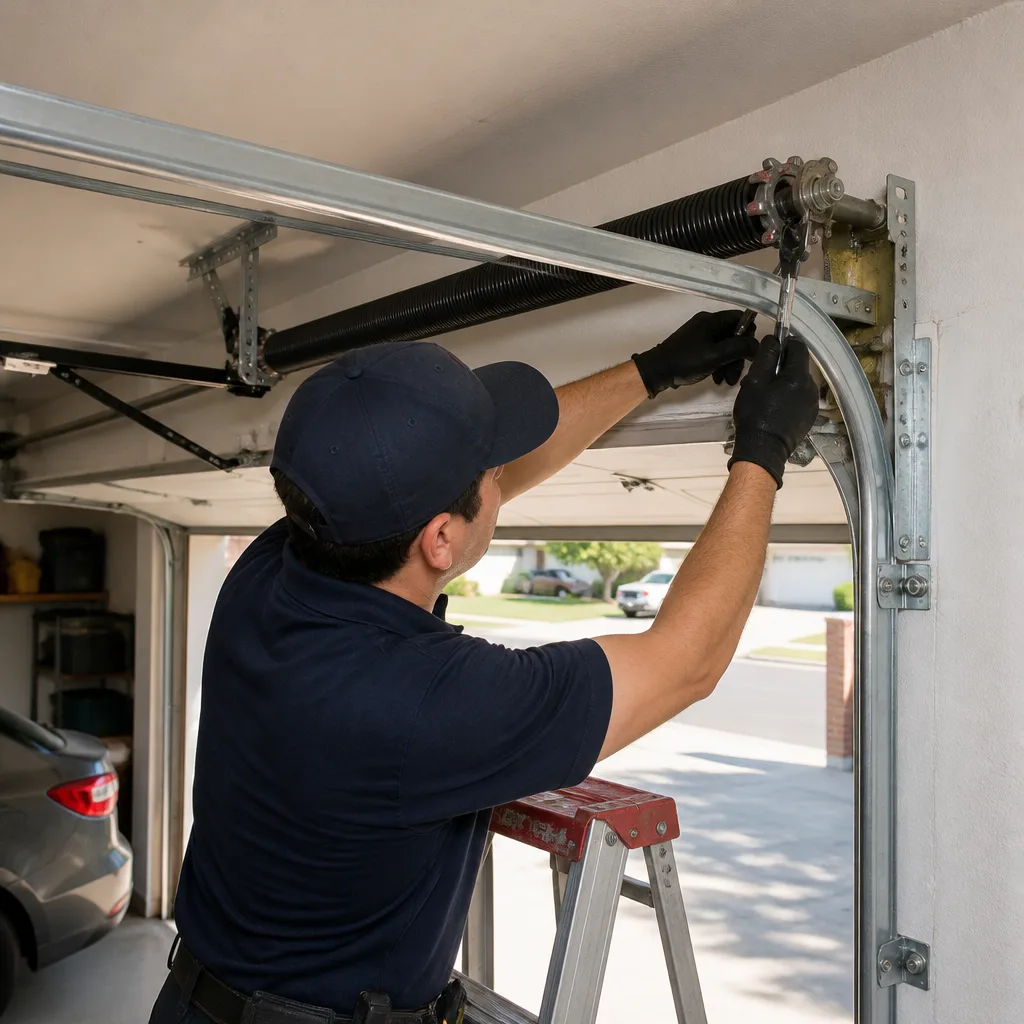 After
After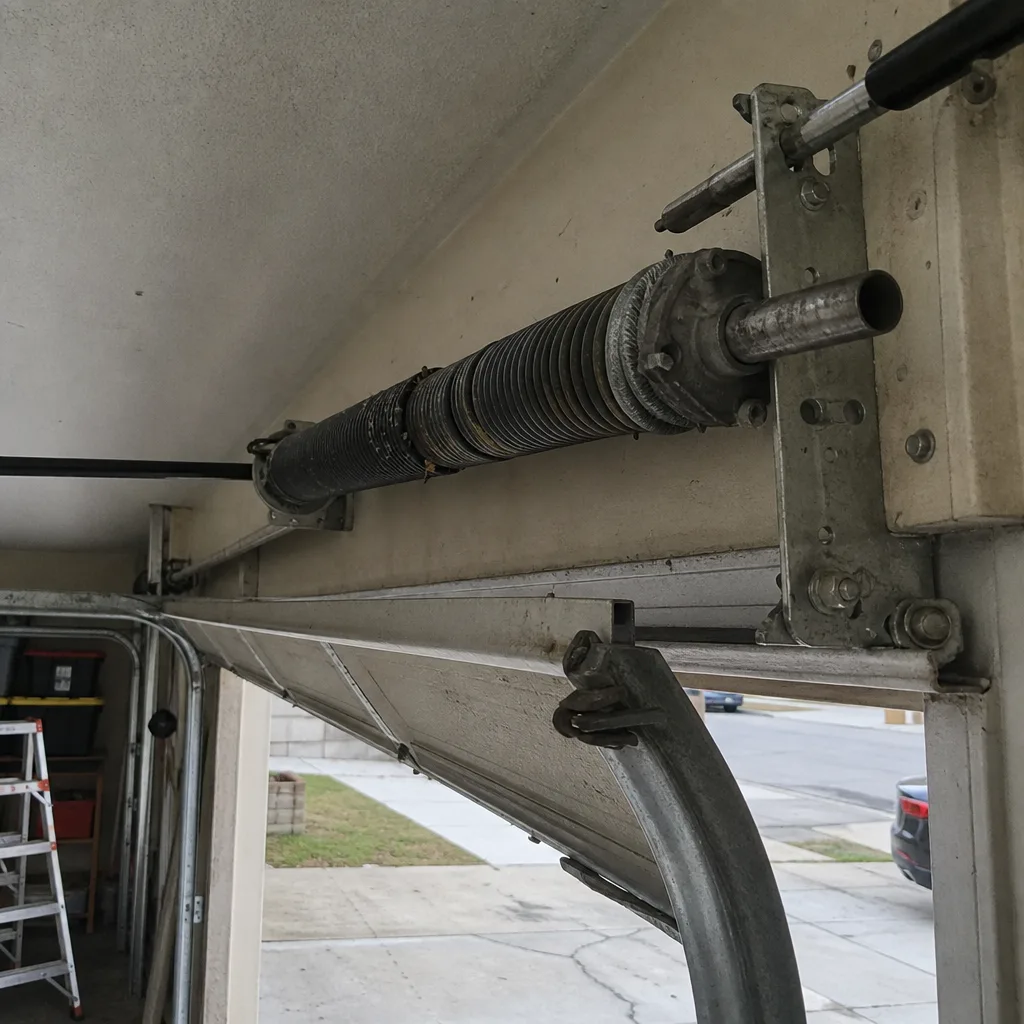 Before
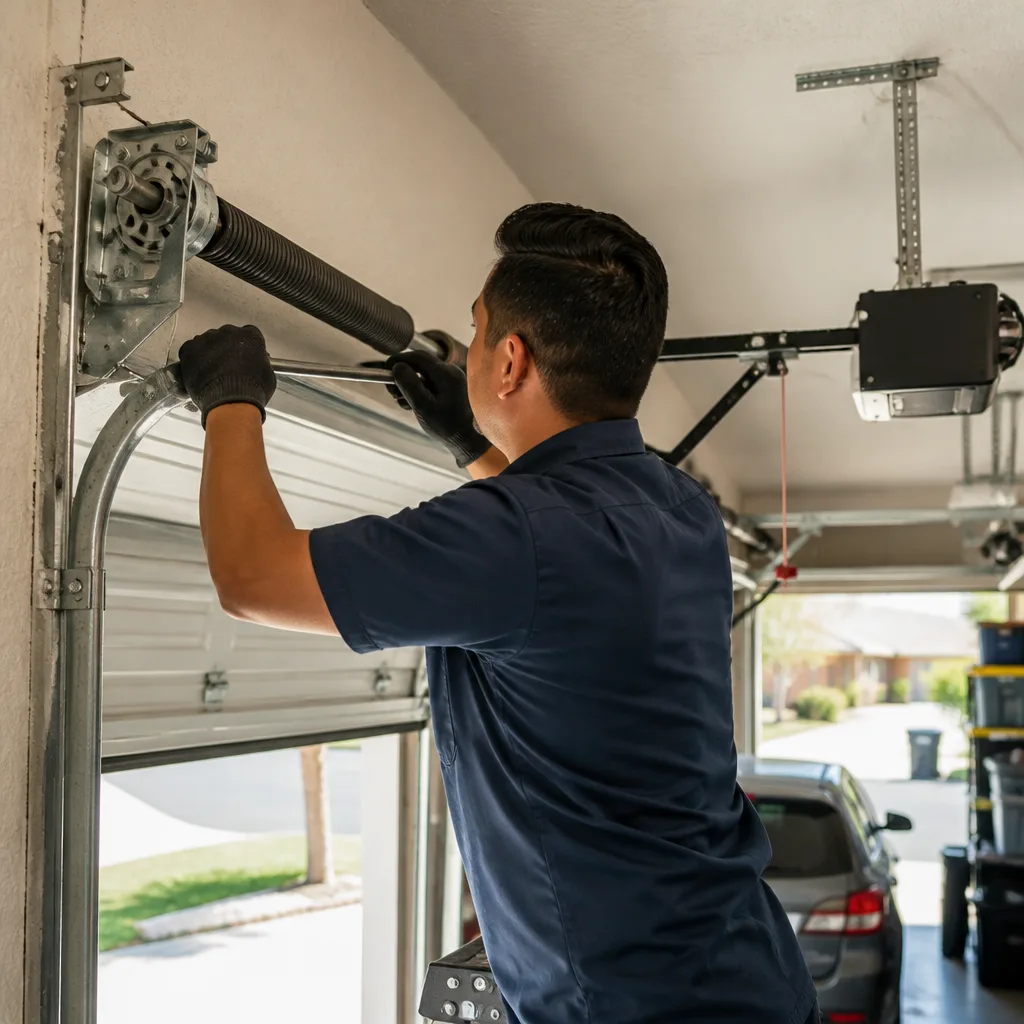 After
After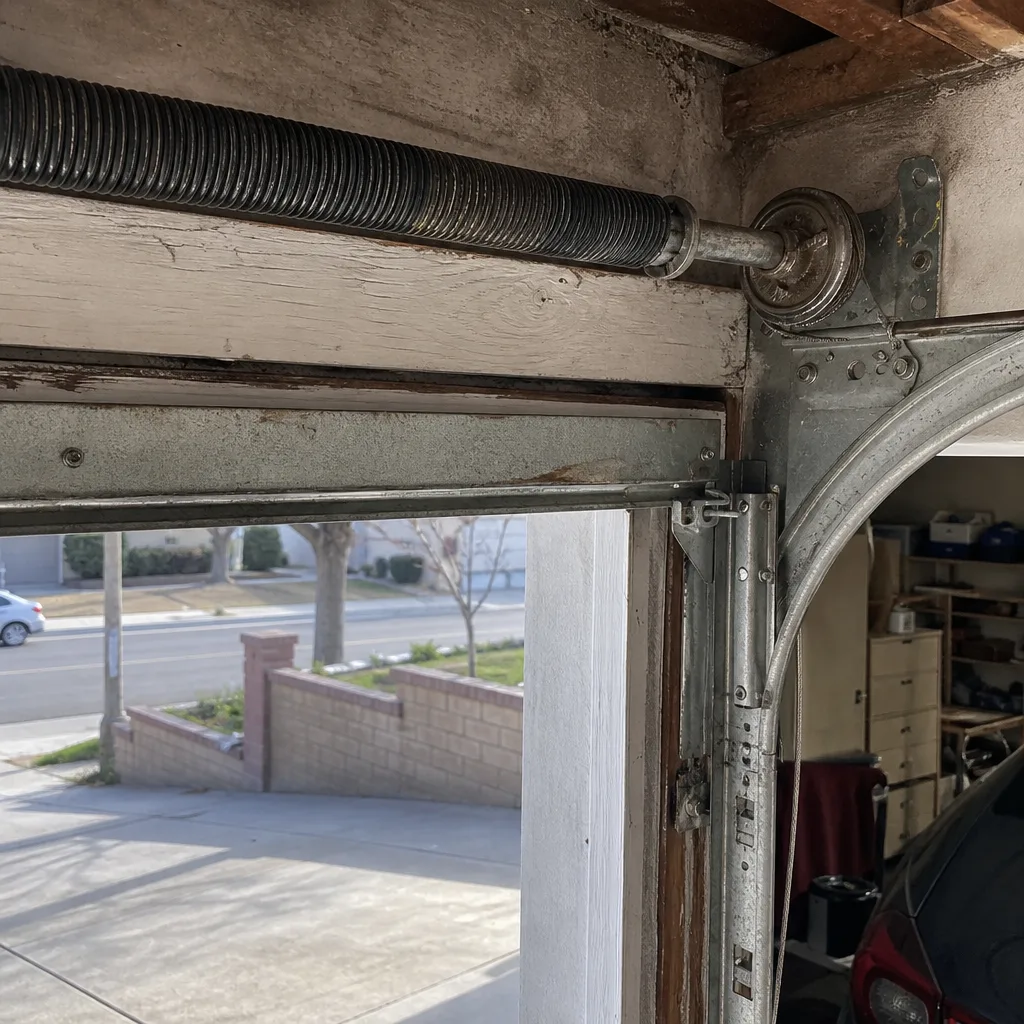 Before
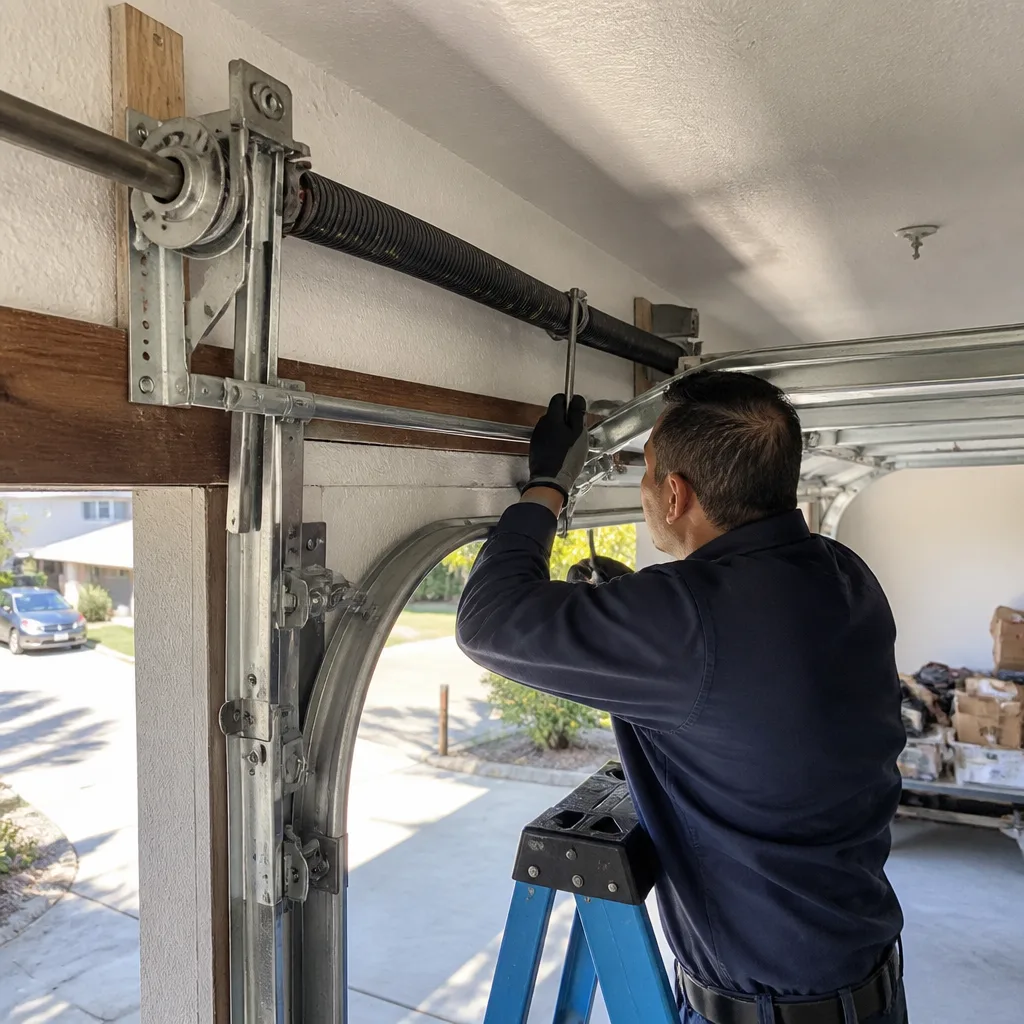 After
AfterHow to Hire a Garage Door Contractor in Rancho Cucamonga: A Step-by-Step Guide
A verbal quote is not a quote. It’s an opening position. Most Rancho Cucamonga homeowners don’t know that California Business and Professions Code §7159 requires a written contract for any home improvement job over $500, and a garage door replacement clears that threshold almost every time. The contractors who count on that gap between what the law requires and what the homeowner knows are the ones who hand you a number in the driveway and a bigger invoice at the end.
This guide and our complete guide to garage doors in Rancho Cucamonga give you a hiring protocol that filters for the practices that actually cost homeowners money: verbal-only pricing, undocumented parts sourcing, and urgency tactics deployed before you’ve had time to think. By the end, you’ll know exactly what to ask, what to verify, and what documentation to demand before anyone touches your door.
Quick Answer
Hire a garage door contractor in Rancho Cucamonga by verifying their CSLB license (classification C-61/D-28), requiring a written contract under California B&P Code §7159 with a flat price and written scope before work starts, confirming they carry parts for your door’s brand on the truck, and checking that they provide photographic documentation of the failed component before quoting a replacement. Expect to pay $95 to $180 for a typical service call in Rancho Cucamonga, $180 to $340 for spring replacement, and $2,200 to $4,800 for a full door replacement depending on material and insulation.
Table of Contents
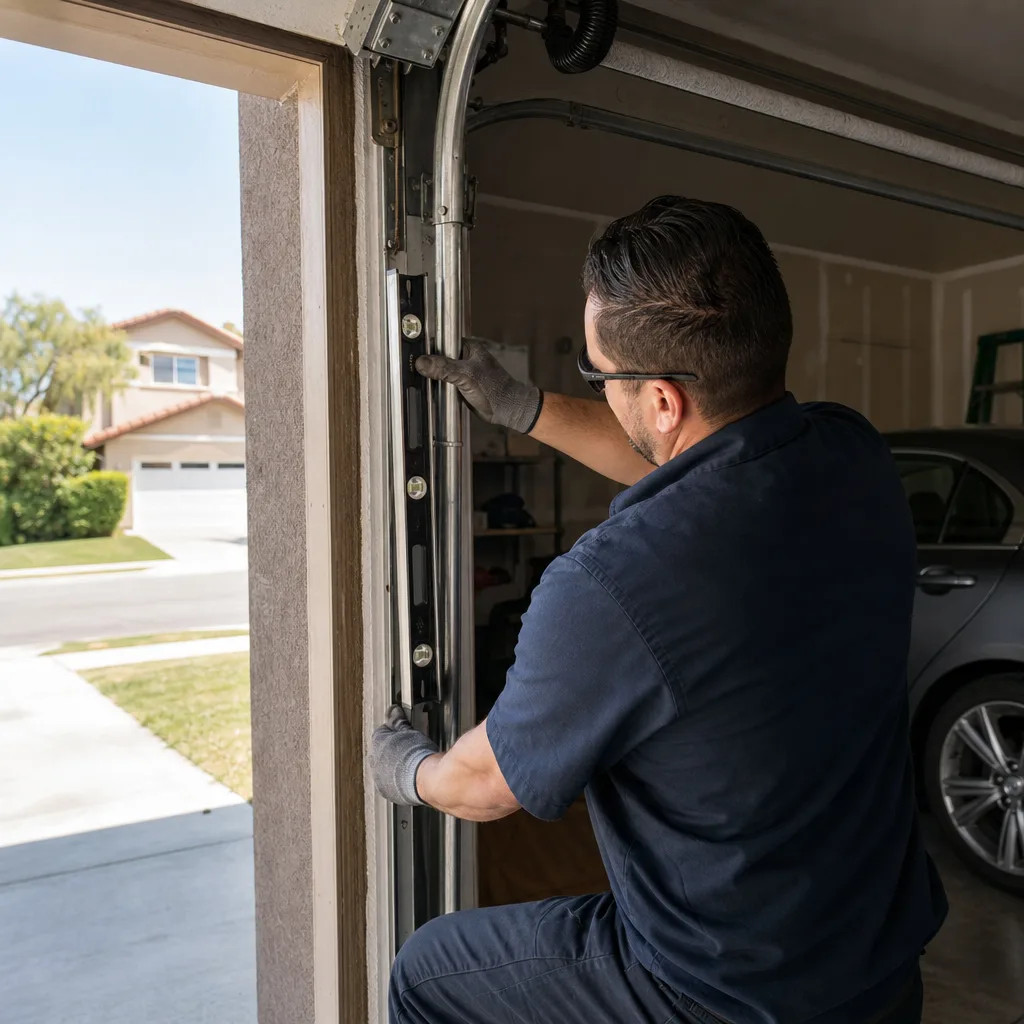
- Step 1: Verify the CSLB License in Under 90 Seconds
- Step 2: Require a Written Contract Under California B&P Code §7159
- Step 3: Ask the Four Questions That Separate Parts-on-Truck Technicians from Sales-First Companies
- Step 4: Demand a Photo of the Failed Component Before Any Quote
- Step 5: Know What Garage Door Work Actually Costs in Rancho Cucamonga
- Step 6: Recognize the Red Flags Specific to Rancho Cucamonga
- Step 7: What to Expect After You Hire
BeforeAfterStep 1: Verify the CSLB License in Under 90 Seconds
Every garage door contractor working legally in Rancho Cucamonga must hold a license issued by the Contractors State License Board (CSLB). The specific classification for garage door work is C-61/D-28, a limited specialty license that authorizes installation, repair, and replacement of garage doors and openers. A general building contractor (B classification) can also legally perform garage door work, but a C-61/D-28 holder has demonstrated competency specific to doors, springs, and openers, not just general construction.
Here’s the 90-second verification process, step by step:
- Ask for the license number. Get it from the contractor’s website, business card, or truck. If they hesitate to provide it, that’s your first red flag, and it’s a serious one.
- Go to the CSLB website. Navigate to cslb.ca.gov and click “Check a License” on the homepage. You do not need to create an account.
- Enter the number. The database will show the license status (Active is what you want), the classification (look for C-61/D-28 or B), the issue date, the expiration date, and any actions or complaints filed against the license.
- Check the workers’ compensation insurance status. This appears on the same license detail page. If it shows “No insurance” or is blank, that means the contractor has not filed proof of workers’ comp coverage. If an uninsured technician gets hurt at your property, the liability can fall on you.
- Note the business name. Confirm the name on the license matches the name on the invoice and the truck. If the license belongs to “ABC Garage Doors” and the truck says “XYZ Garage Repairs,” ask why.
We’ve seen Rancho Cucamonga homeowners find unlicensed operators advertising on community Facebook groups and Nextdoor, often with prices that undercut licensed competitors by 30% or more. The savings evaporate the first time something goes wrong. An unlicensed contractor carries no liability insurance, no workers’ comp, and no legal obligation to honor a warranty. In California, you have almost no recourse against unlicensed work that fails.
Step 2: Require a Written Contract Under California B&P Code §7159
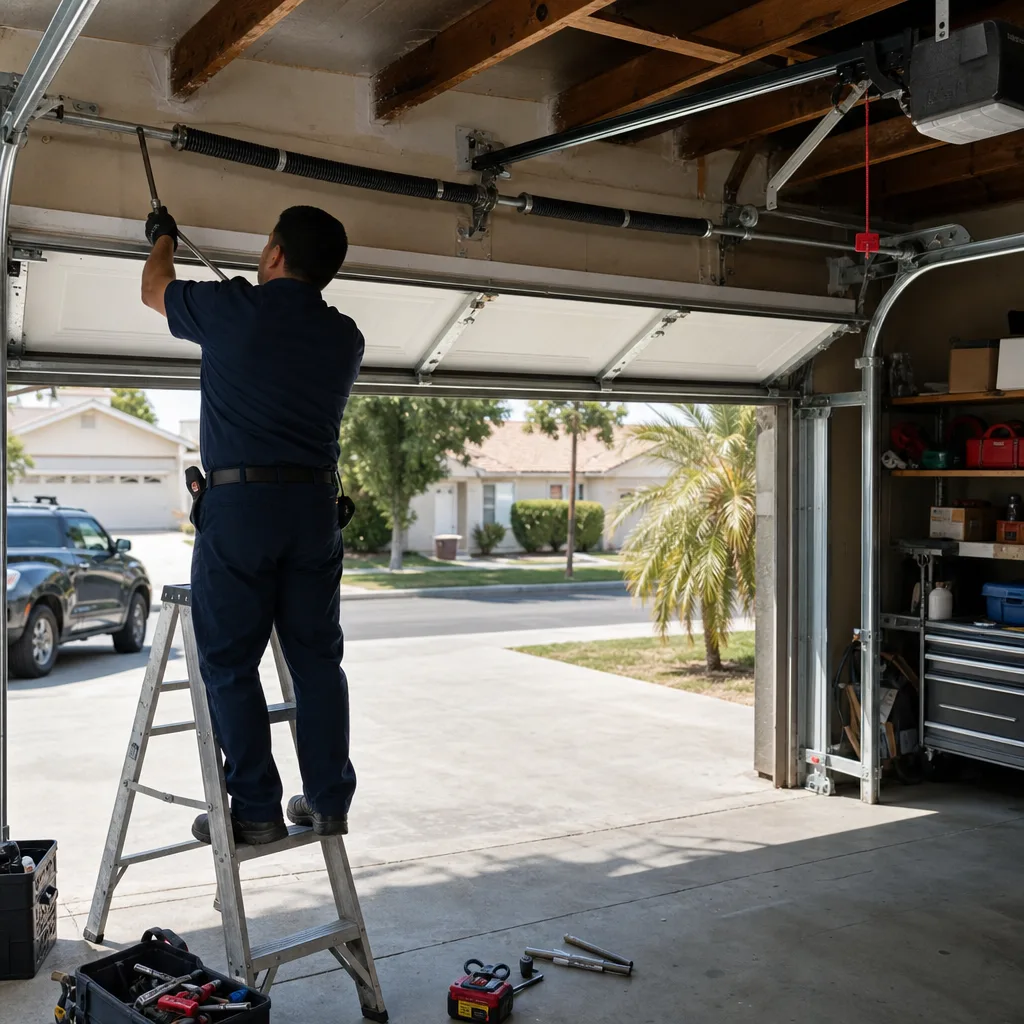
California Business and Professions Code §7159 governs home improvement contracts. It applies to any job over $500, which includes nearly every garage door replacement and most spring replacement calls in Rancho Cucamonga. The specific requirements matter: the contract must be in writing, it must include the contractor’s license number, it must describe the work to be performed, and it must state the total contract price.
Here’s what §7159 requires a legitimate garage door invoice or contract to contain before work begins:
- The contractor’s name and CSLB license number. Not just a phone number and a first name. The full legal business name as registered with the CSLB.
- A written description of the work. This means the specific parts being replaced (e.g., torsion spring, cables, rollers, opener motor, logic board), not a vague line item like “door repair.”
- The total contract price. Not an estimate with a range. Not “time and materials.” A flat, specific dollar amount.
- The schedule of payments. For garage door work, legitimate contractors typically collect full payment upon completion. A contractor demanding full payment before work begins is a red flag under §7159, which limits down payment to 10% of the total or $1,000, whichever is less.
- A notice of the homeowner’s right to cancel. California law gives you three days to cancel a home improvement contract without penalty. The contract must inform you of this right.
At Servo Garage Doors Rancho Cucamonga, this isn’t a negotiation point. The Haven Standard, the operating system we work under, codifies it as Clause 1: a flat, written price and written scope are delivered before any work starts, always, on every job. “Call for a quote” isn’t how this works. If a contractor won’t put the price in writing before touching your door, that’s not a personality quirk. It’s an arrangement designed to let the number move.
One more point about §7159: it applies regardless of whether the contractor prints a formal contract or scribbles something on an invoice. The law looks at whether a written document exists that meets the minimum requirements. If a contractor says “we don’t do contracts for small jobs,” they’re either misinformed or hoping you don’t know better. Either way, move on.
Step 3: Ask the Four Questions That Separate Parts-on-Truck Technicians from Sales-First Companies
The difference between a repair technician and a salesperson wearing a tool belt often shows up in the answers to four specific questions. Ask these before anyone opens a toolbox in your Rancho Cucamonga garage. The answers will tell you whether you’re dealing with someone who fixes doors or someone who manufactures replacement opportunities.
Question 1: “What specifically is wrong, and can you show me the failed component?”
A legitimate technician will name the part: the torsion spring measured at 0.25-inch wire diameter and showed a clean break at the coil. The left cable has a snapped strand near the drum. The logic board has a failed relay. They will point to the part and explain the failure mode. A sales-first tech will speak in generalities: “the whole door is worn out” or “these older doors just aren’t worth fixing.” If you hear broad claims without specific part failures, ask for the specific part.
Question 2: “Do you carry parts for my door’s brand on the truck?”
This matters more than most homeowners realize. Garage doors and openers from different manufacturers use different spring sizes, different cable lengths, different logic boards. A technician with a fully stocked truck can complete most repairs in a single visit. A technician who doesn’t carry parts for your brand has to leave, order from a distributor, and come back. In Rancho Cucamonga, where summer temperatures routinely exceed 95 degrees, a garage door stuck open for two days while someone waits on a parts shipment is both a security risk and an invitation for pests. We service all eight major brands: LiftMaster, Chamberlain, Genie, Clopay, Amarr, Wayne Dalton, Craftsman, and Raynor. Ask the contractor which brands they stock, not which brands they can order.
Question 3: “Will you put the price in writing before starting?”
This isn’t a courtesy question. It’s a filter, and it’s the one that exposes the most contractors who count on ambiguity. If the answer is anything other than an immediate yes with no qualifiers, you’re not getting a quote. You’re getting an opening position. A contractor operating under a written-price-first system answers this question without pausing.
Question 4: “What is your warranty, and what does it cover?”
Every parts manufacturer offers some warranty coverage. The question is what the contractor adds on top of it. Does their labor carry any guarantee? For how long? What happens if the same spring fails again in 90 days? A contractor who can’t answer this question clearly doesn’t expect to hear from you after the truck leaves. The 365-Day Done Right Promise is how we answer it: if a repair isn’t right, we make it right, within 365 days. That’s backed by a written terms page, not a handshake.
Step 4: Demand a Photo of the Failed Component Before Any Quote
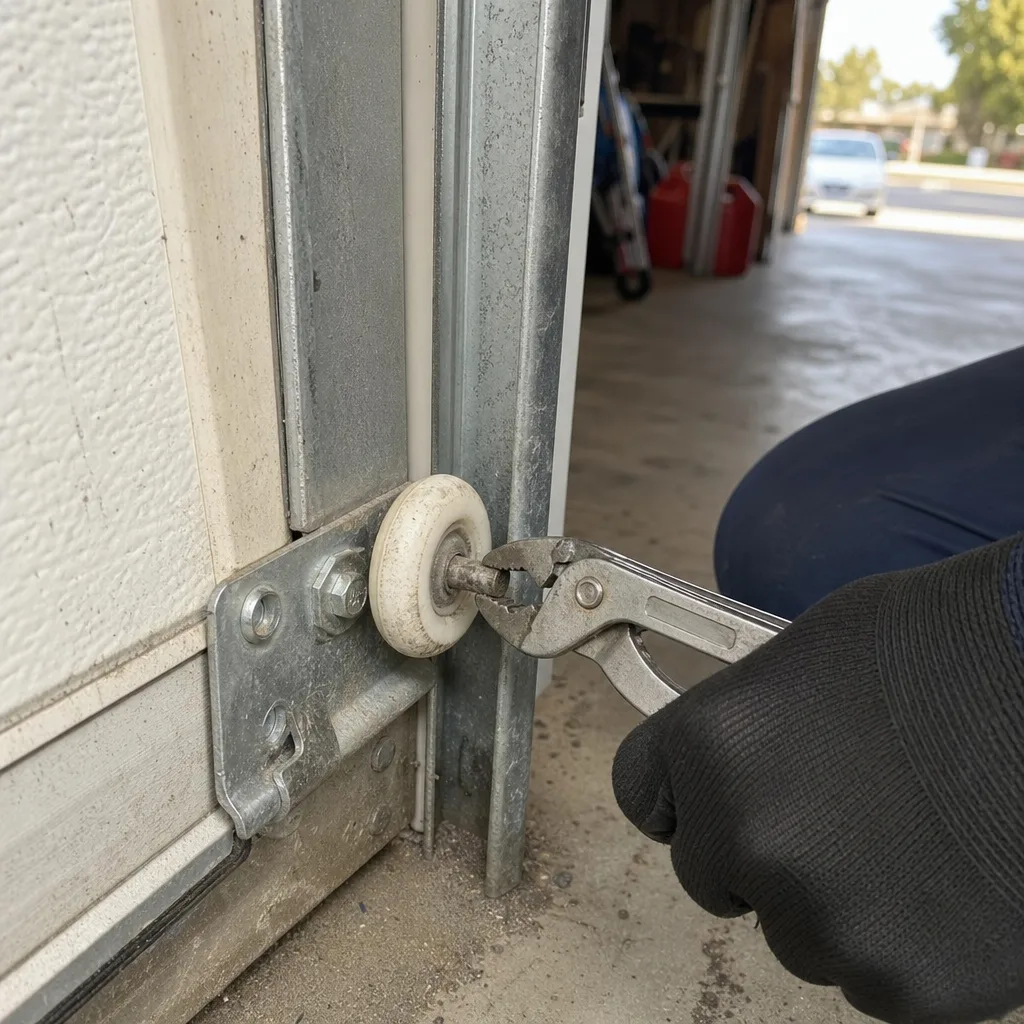
Here’s the founding rule of how we work at Servo: the customer sees the failed part before anyone quotes a replacement. It’s codified in The Haven Standard as Clause 4, and it works as a consumer protection mechanism even if you never hire us.
Here’s what a legitimate pre-quote photograph looks like:
- It’s your door. Not a stock image. Not a photo from another job. You can see your wall texture, your floor stain, your car in the background.
- It shows the specific failure. A spring with a visible gap where the coil snapped. A cable with frayed strands. A roller with a cracked bearing. The photo should isolate the failed component clearly enough that a third party could look at it and agree with the diagnosis.
- It’s taken at a resolution that shows detail. If you can’t zoom in and see the failure mode, the photo isn’t documentation. It’s theater.
- It includes the date and ideally the technician’s name. Either embedded in the photo metadata or written on the estimate.
Why does this matter for your own records? Because the photo becomes the paper trail. If you get a second opinion, that photo is what the second technician reviews. If you file an insurance claim, the photo supports your documentation. If a dispute arises about what was actually wrong, the photo ends the argument.
In Rancho Cucamonga, where garage door repair is competitive enough that some companies send commission-based salespeople rather than technicians, the photo requirement separates the two categories quickly. A sales-first company has no incentive to show you proof; proof narrows their options. A repair-first company wants you to see it. The photo is the evidence, and evidence is the point.
Step 5: Know What Garage Door Work Actually Costs in Rancho Cucamonga
Here’s the pricing conversation most companies in Rancho Cucamonga don’t want shown on a web page, in dollars, with ranges attached. Many contractors hide prices behind “call for a quote” because it gives them room to adjust the number based on what they think you’ll pay. The Haven Standard doesn’t work that way, and neither does this guide. Here’s what we see across the market in Rancho Cucamonga, including neighborhood-level variance:
Typical Garage Door Service Pricing in Rancho Cucamonga
| Service | Typical Range | What Affects the Price |
|---|---|---|
| Service call / diagnostic fee | $95-$180 | Usually applied toward repair if you proceed |
| Torsion spring replacement (single) | $180-$280 | Spring size, cycle-rated vs. standard |
| Torsion spring replacement (pair) | $320-$540 | Most springs are replaced in pairs; the second adds marginally more |
| Garage door opener replacement (belt drive, installed) | $480-$750 | Brand, horsepower, smart features |
| Full garage door replacement (standard steel, single-car) | $1,800-$3,200 | Insulation R-value, gauge, finish |
| Full garage door replacement (custom or wood, double-car) | $3,500-$6,800 | Material, hardware, custom finish work |
In newer developments near Foothill Boulevard and the Etiwanda area, we see more torsion spring failures in doors that came with the original home build, often because builder-grade springs were installed over a decade ago, and Rancho Cucamonga’s heat accelerates metal fatigue. In older neighborhoods near Archibald and Baseline, we see more logic board failures and rail wear on aging openers, especially LiftMaster and Genie units installed in the early 2000s.
Whatever the number, the rule is the same: it’s quoted and agreed before any work starts. If a technician gives you a verbal range and then starts working before you’ve seen a written number, stop the work. The price you agree to verbally is not the price you’re required to pay, and the price they’re required to honor is the one on a written contract.
Step 6: Recognize the Red Flags Specific to Rancho Cucamonga
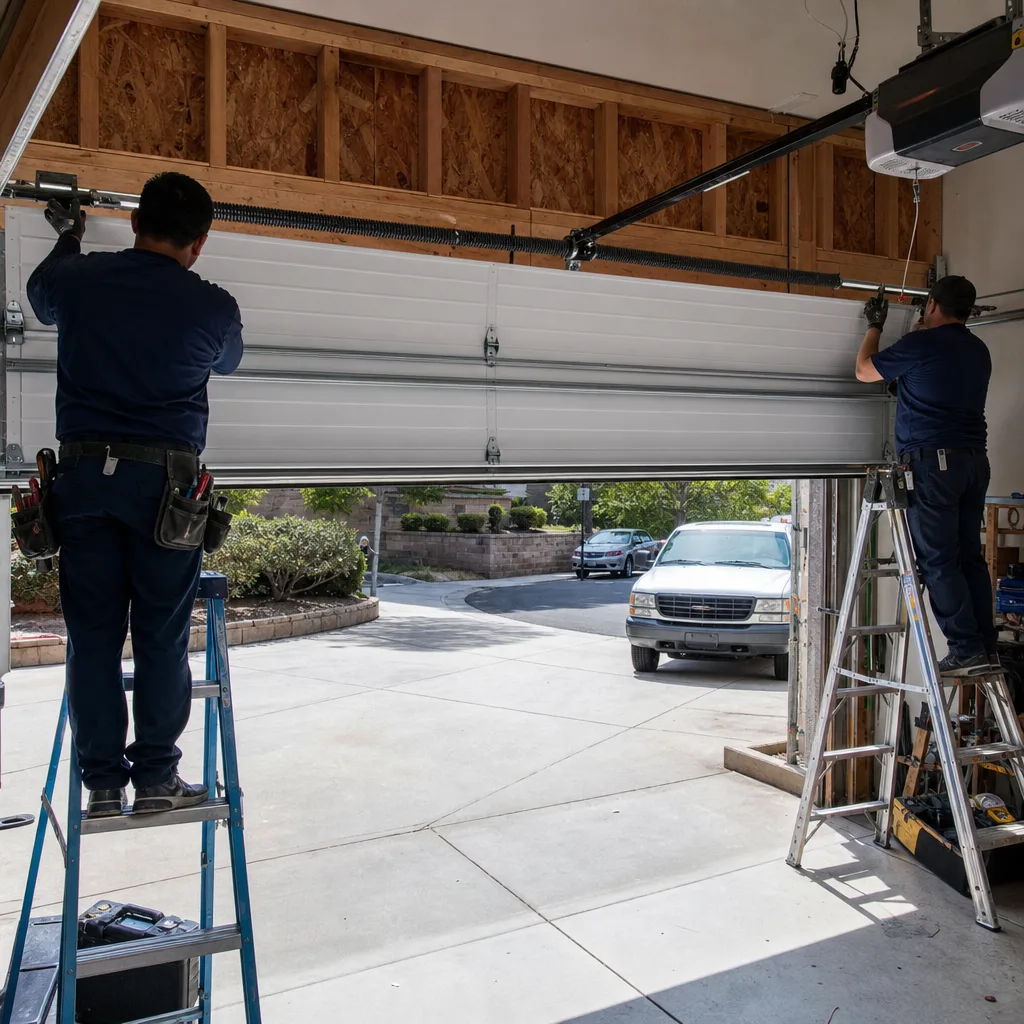
Every market has its own scams and questionable practices. Here’s what we hear about from homeowners across Rancho Cucamonga, and what each one actually means:
- Same-day-only pricing windows. “This price is only good if you sign today.” In California, you have a three-day right of cancellation on home improvement contracts by law. Any contractor pressuring you to decide before you can verify their license, check their CSLB status, or get a second opinion is attempting to end-run that legal protection. A legitimate contractor’s price holds because the work is priced fairly, not because the clock is running.
- Unlicensed subcontractor handoffs. The company whose truck shows up isn’t the company that does the work. The licensed contractor took the job and passed it to someone without a license, without insurance, and without any paper trail. Ask whose name goes on the contract and confirm that the technician on site works directly for that entity.
- Parts described by brand name without part numbers. “We’re installing a LiftMaster opener.” Which LiftMaster opener? What model? What logic board version? A part described only by brand name gives the contractor unlimited room to install whatever’s cheapest for them, not what’s right for your door. Demand model numbers on the written scope.
- “Free” safety inspections that find urgent problems. This is the classic upsell play: the inspector comes out for free and discovers a “dangerous” condition that needs immediate attention. If the repairs are urgent, ask for a written description of the specific failure and a photo. If they can’t provide either, the urgency is a sales tactic, not a safety finding.
- Cash-only pricing. “I can do it for $50 less if you pay cash.” This frequently means the job won’t appear on the books, which means no written contract, no record of the work, and nothing to enforce if it fails. In a market with as many quality contractors as Rancho Cucamonga has, there’s no reason to accept cash-only terms.
Step 7: What to Expect After You Hire
The hiring decision is the beginning, not the end. A contractor’s process after you sign the written contract reveals whether the documentation-first approach was a sales pitch or an operating system. Specifically:
- A copy of the written scope and price before work starts. You should have this in your hands, in writing, whether printed or emailed. If the technician arrives without the paperwork, that’s a failure of process, not a minor inconvenience.
- Photographic documentation of findings. Before any replacement part is quoted, you should see the failed component in a photo. This is the foundation of informed consent. You’re not approving a “spring replacement” in the abstract; you’re approving the replacement of the specific spring with the visible coil break shown in the photo.
- Photographic documentation of completed work. After the repair or installation, you should receive photos showing the new components installed. The door’s full range of motion should be demonstrated: open, close, stop, reverse. A technician who finishes and drives away without showing you the door working under its own power hasn’t completed the job.
- A written warranty. Not a verbal promise. The warranty should name the parts covered, the duration of coverage, and what the contractor will do if the same component fails. Clause 4 of The Haven Standard is why the photograph exists; the warranty is why the work holds up.
- A receipt with the total price, matching the written scope. The number on the receipt should equal the number you agreed to before work started. If it doesn’t, you have a written contract and a photo record to support a dispute. That’s the entire point of the paper trail.
For garage door repair in Rancho Cucamonga, we handle this process end to end in one visit for most repairs: the diagnosis, the written quote, the photo documentation, the repair, the final documentation, and the written warranty. For garage door installation in Rancho Cucamonga, the process adds a measure step, a door order, and a scheduled installation date. Garage door opener repair and installation in Rancho Cucamonga follows the same protocol, with the addition of security settings and remote programming confirmed before the technician leaves.
Common Mistakes to Avoid
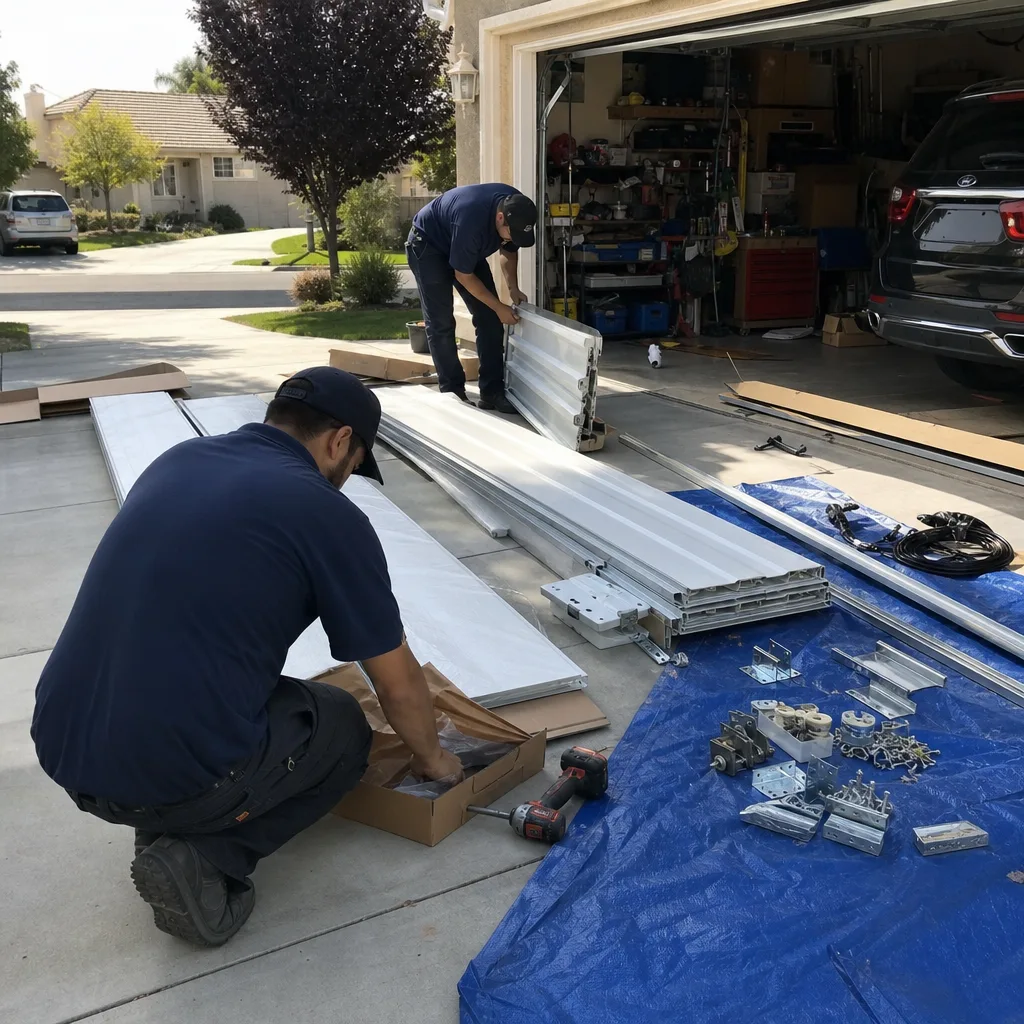
- Accepting a verbal quote. If the price isn’t in writing, the price doesn’t exist. California law requires written contracts for jobs over $500, and garage door work clears that threshold constantly. A contractor who won’t write it down is telling you something about how they handle disputes.
- Skipping the CSLB check. It takes less than two minutes on your phone. We’ve seen homeowners in Rancho Cucamonga learn after the fact that their contractor’s license was suspended or expired, which means no legal recourse, no insurance coverage, and no workers’ comp if someone gets hurt.
- Choosing the lowest bid without comparing scope. One quote for $1,900 includes a steel door, torsion spring, installation, and haul-away of the old door. Another quote for $2,400 includes the same plus a longer warranty and better insulation. The second quote isn’t more expensive; it’s a different product. Compare line items, not just totals.
- Paying in full before the work is done. Under California law, a contractor cannot require more than 10% of the total or $1,000, whichever is less, before work begins. Full payment comes when the work is complete and the documentation is delivered.
- Letting urgency override verification. A spring snapped in the morning, and now the door won’t open, and you’re late for work, and the first contractor who answers the phone says they can be there in 45 minutes. That’s the moment the scam works. Do the 90-second CSLB check anyway. A snapped spring is a real problem, but an unlicensed contractor makes it worse.
- Not asking about the technician’s employment status. Is the tech an employee of the company you hired, or a subcontractor? If a subcontractor, does the sub carry their own insurance and license? In Rancho Cucamonga, the handoff is common enough that asking the question should be automatic.
- Using a door that won’t stay closed as a temporary license to skip maintenance. The door that’s “a little noisy” or “sticks sometimes” is the door that fails completely on the morning you need it most. If your door was installed before 2015 and has never had its springs and rollers inspected, book an inspection before you develop a failure.
When to Call a Professional
Certain garage door problems are genuinely dangerous to attempt as DIY work, and the risk is not subtle. Torsion springs are under enough tension to cause serious injury or death if they release improperly. Cables can sever fingers. A door that’s off its tracks can drop without warning. If your door has a snapped spring, a frayed cable, a bent track, or an opener that behaves erratically, that’s not a weekend project. That’s a call to a trained technician with the right tools and, more importantly, the right training for the specific failure mode. This is also one of the rare home categories where the cost of professional work is frequently less than the cost of a hospital visit, let alone the cost of a botched DIY repair.
Servo Garage Doors Rancho Cucamonga offers free estimates for garage door work throughout Rancho Cucamonga. Call (909) 498-8655, and a real person answers, no matter the hour.
Frequently Asked Questions
Go to cslb.ca.gov and enter the contractor’s license number under “Check a License.” You’ll see the license status (look for “Active”), classification (C-61/D-28 for garage door specialty or B for general building), issue and expiration dates, workers’ compensation insurance status, and any disciplinary actions. The entire check takes under 90 seconds, and it’s the single most effective screening step available to a Rancho Cucamonga homeowner.
Expect to pay $95 to $180 for a service call, $180 to $340 for a single spring replacement, $320 to $540 for spring replacement in pairs, and $1,800 to $4,800 for a full door replacement, depending on material and insulation. The price should be flat and written before work starts under California B&P Code §7159. Call (909) 498-8655 for an exact quote, and the estimate is free.
Yes. California Business and Professions Code §7159 requires a written contract for any home improvement project over $500, which covers nearly all garage door replacements and most spring and opener work. The contract must include the contractor’s license number, a written description of the work, the total price, and notice of your three-day right to cancel.
A C-61/D-28 is a California Contractors State License Board limited specialty classification for garage door installation, repair, and replacement. It certifies that the holder has demonstrated competency in door-specific work like spring replacement, opener installation, and track alignment, as opposed to a general building contractor who is licensed for broader construction work but may not specialize in doors.
Repair when the failure is isolated to a replaceable component, like a spring, cable, roller, or opener logic board, and the door panels themselves are structurally sound. Replace when the door has significant panel damage, sagging sections, or when you want a meaningful upgrade in insulation, noise reduction, or curb appeal. A legitimate contractor will show you the specific failure and let the documentation, not the sales pitch, drive the decision.
Rancho Cucamonga’s summer heat accelerates metal fatigue in torsion springs. Standard springs are rated for roughly 10,000 cycles, which is about seven to ten years of normal use. In the inland empire’s temperature swings, where the garage interior can reach 110 degrees on summer afternoons and drop 40 degrees overnight, the springs expand and contract daily. Our Seasonal Garage Door Care for Rancho Cucamonga covers how to protect your door year-round. That thermal cycling shortens the effective lifespan, which is why we recommend cycle-rated springs for any Rancho Cucamonga door that’s opened more than twice a day.
The Bottom Line
Hiring a garage door contractor in Rancho Cucamonga is a process with specific, verifiable checkpoints: the CSLB license number that checks out as active, the written contract under B&P Code §7159 with a flat price and written scope, the technician who names the failed part and shows you a photo of it, the warranty in writing, and the receipt that matches the quote. None of these steps require trusting anyone’s word. Each one produces documentation you can hold, verify, and use if something goes wrong. The contractors who operate this way don’t ask you to trust them. They hand you the evidence instead.
Written by Marcus Deller, Owner at Servo Garage Doors Rancho Cucamonga, serving Rancho Cucamonga since 2015.