

Last updated September 20, 2026
Full 25-point door and opener safety check with every visit - springs, cables, rollers, tracks, and your LiftMaster or Chamberlain opener included
You get a price before we start. It does not change when the truck arrives.
 Before
 After
After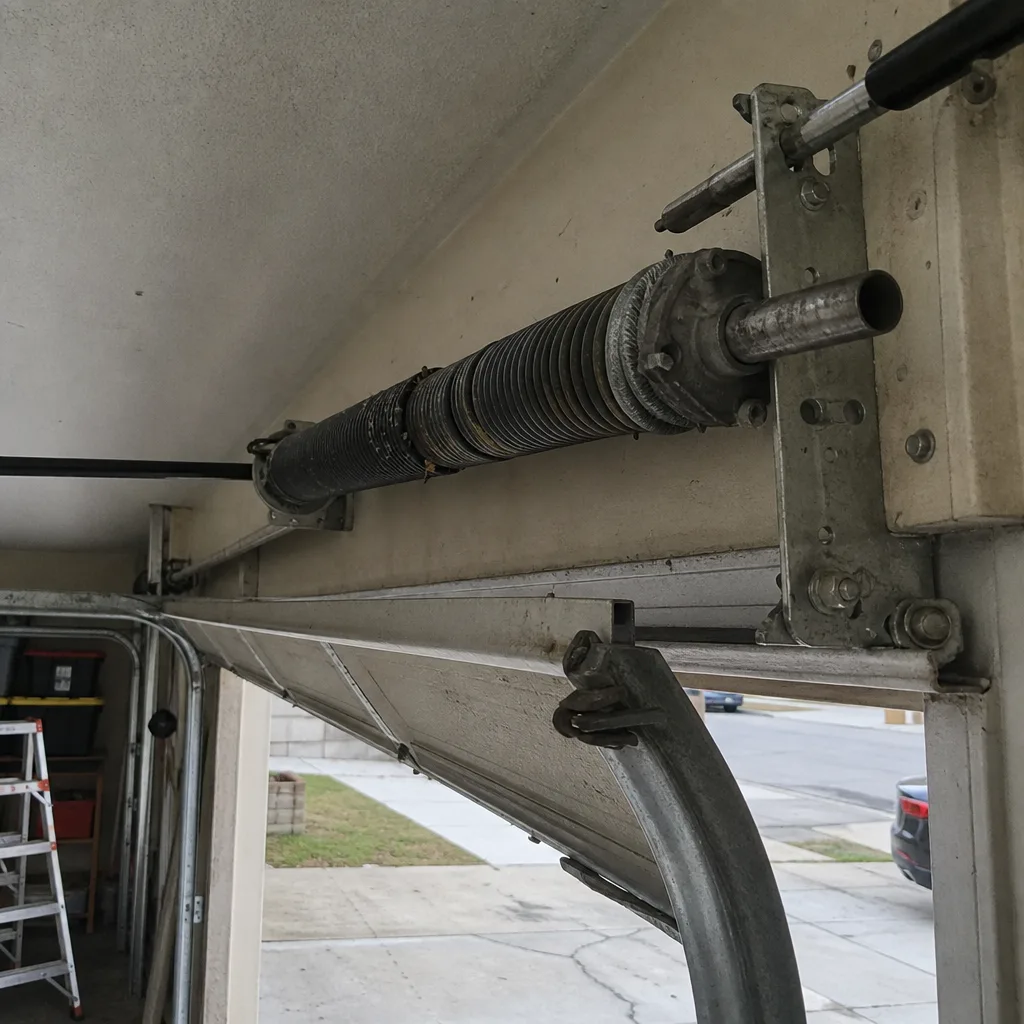 Before
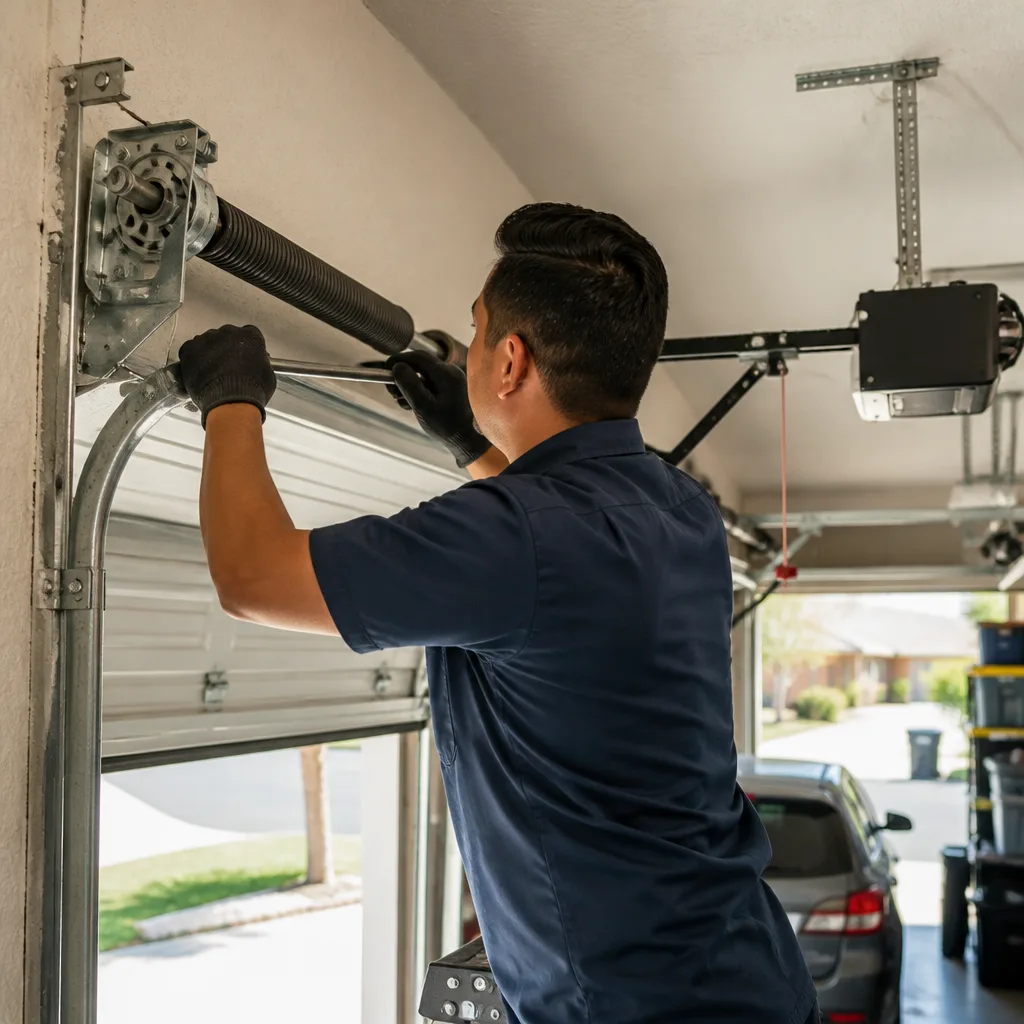 After
After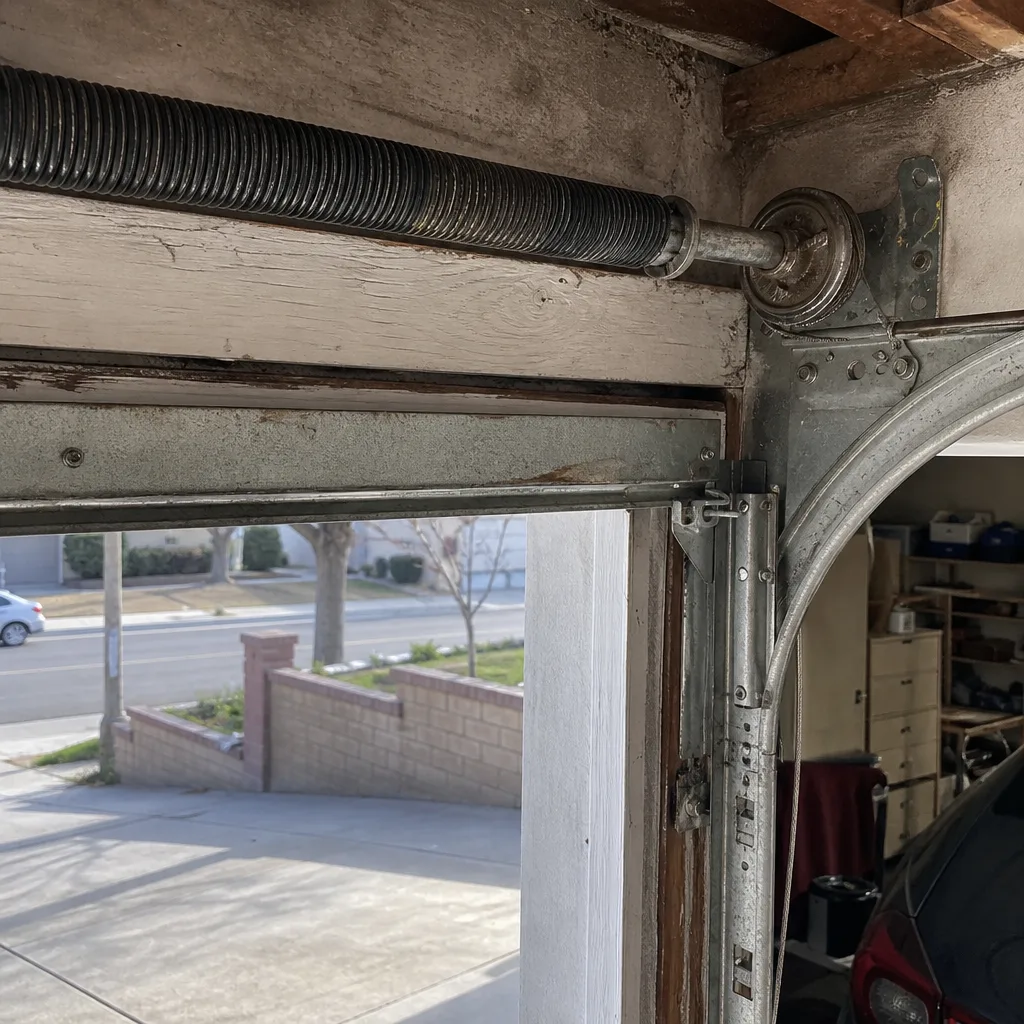 Before
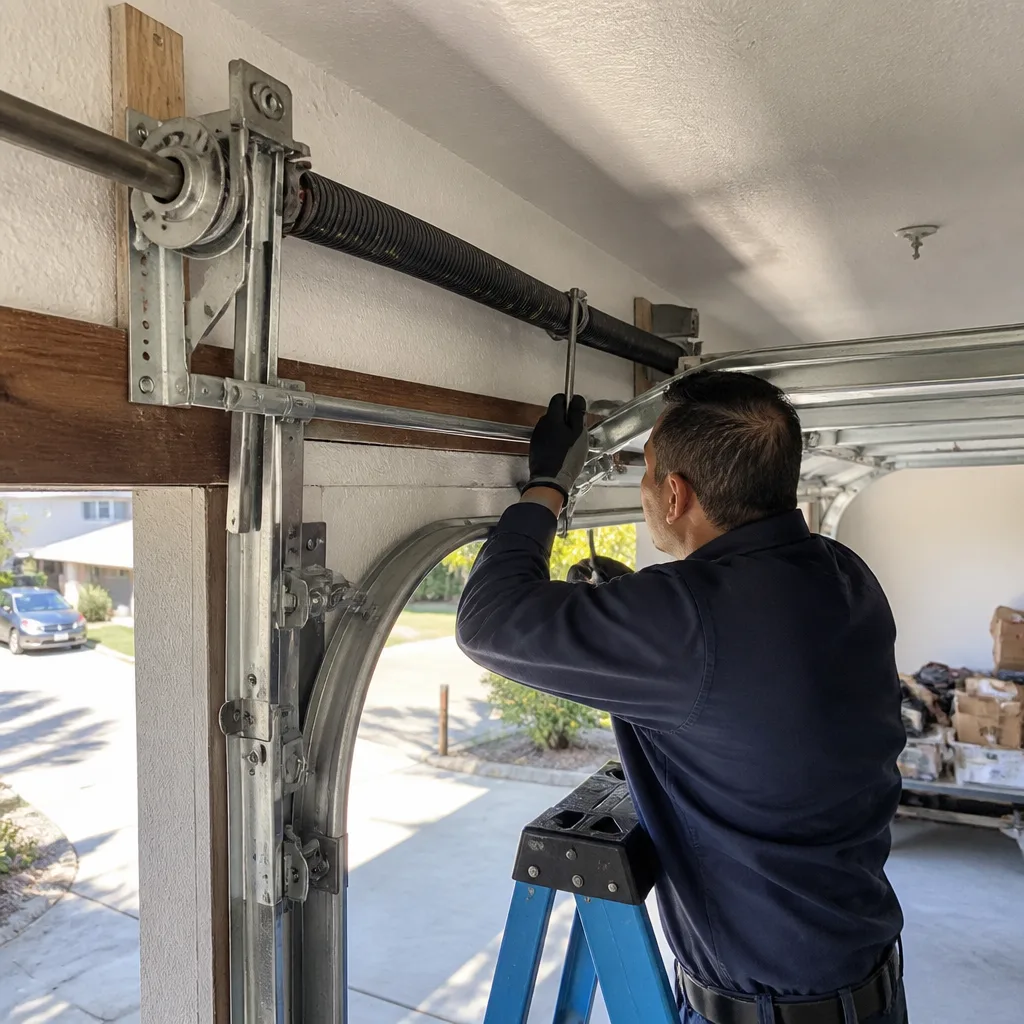 After
AfterSeasonal Garage Door Care for Rancho Cucamonga: Year-Round Homeowner’s Guide
Santa Ana wind events, not rain, are responsible for more garage door track misalignments in the Inland Empire than any other weather condition, yet national maintenance guides never mention them. Rancho Cucamonga doesn’t experience four equal seasons. It has a heat season, a Santa Ana season, a wet season, and a brief mild window between them, and each creates a distinct failure mode in your garage door system. This guide walks through what to inspect, when to inspect it, and what to record so you can catch wear before it becomes a breakdown, while our Complete Guide to Garage Door in Rancho Cucamonga covers broader installation and replacement topics. We’ve serviced doors in Rancho Cucamonga since 2015, and the pattern repeats every year: homeowners who follow a season-specific checklist spend far less than those who wait for the loud bang.
Quick Answer
Seasonal garage door care in Rancho Cucamonga means four distinct checklists: pre-heat-season spring and capacitor checks in April and May, cable drum and track inspections before and after Santa Ana wind events from September through November, threshold seal and track corrosion checks during the December-to-February wet season, and lubrication only during the mild windows of March and November, when temperatures stay between 60°F and 80°F. Photograph and record measurements each season so year-over-year wear is visible before failure. Most seasonal issues cost under $200 to fix when caught early; the same components left untouched typically become $400-to-$900 repairs, as detailed in our Garage Door Cost Breakdown: The Rancho Cucamonga Homeowner’s Reference for 2026.
Table of Contents
- Rancho Cucamonga’s Real Seasons: Why Generic Advice Fails Here
- Pre-Heat-Season Tasks: April Through May
- Santa Ana Preparation: September Through November
- Wet-Season Tasks: December Through February
- The Mild Window: Lubrication Timing in March and November
- Documentation Format: What to Photograph and Record Each Season
- Common Mistakes to Avoid
- When to Call a Professional
- Frequently Asked Questions
- The Bottom Line
BeforeAfterRancho Cucamonga’s Real Seasons: Why Generic Advice Fails Here
National garage door maintenance articles follow a spring-and-fall template written for places with four equal seasons and real winter. Rancho Cucamonga doesn’t fit that template. Our climate is shaped by the San Gabriel Mountains to the north, the Santa Ana wind corridor through the Cajon Pass, and summer temperature swings that routinely exceed 40°F between day and night in neighborhoods like Etiwanda, Alta Loma, and Terra Vista.
Here’s what that means mechanically. Torsion springs, the coiled steel components above the door that counterbalance its weight, are rated for roughly 10,000 cycles. Temperature cycles accelerate fatigue. A spring that measures 0.225-inch wire diameter and averages four open-close cycles daily should last about seven years in a stable coastal climate. In Rancho Cucamonga, where a single July day can push the steel from 58°F at dawn to 104°F by midafternoon, that same spring often gives out in five. We see the clean breaks most often in July and August, but the fatigue starts in April and May when the first sustained heat arrives.
The second local factor is wind. The Santa Ana events that hit Rancho Cucamonga between September and November are dry, sustained, and gusting. A 40-mph gust pushing against a 16-foot-wide double door exerts hundreds of pounds of lateral force. That force doesn’t break the door. It bends track brackets, pulls cable drums out of alignment, and shifts the door enough that rollers bind in the track. The damage is gradual, which is why it goes unnoticed until the door sticks mid-travel or a cable jumps the drum entirely.
The third factor is dust. Rancho Cucamonga sits in a semi-arid zone, and fine particulate settles into garage door tracks, roller bearings, and operator rails year-round. During the dry season, that dust combines with existing lubricant to form an abrasive paste that accelerates roller wear. This is why lubrication timing matters here in a way it doesn’t in wetter climates. More on that in the mild-window section below.
The point is this: a seasonal maintenance schedule built for Rancho Cucamonga has to address heat stress, wind stress, and dust. Generic advice about checking weatherstripping in the fall misses the two failure modes that actually dominate our service calls.
Pre-Heat-Season Tasks: April Through May
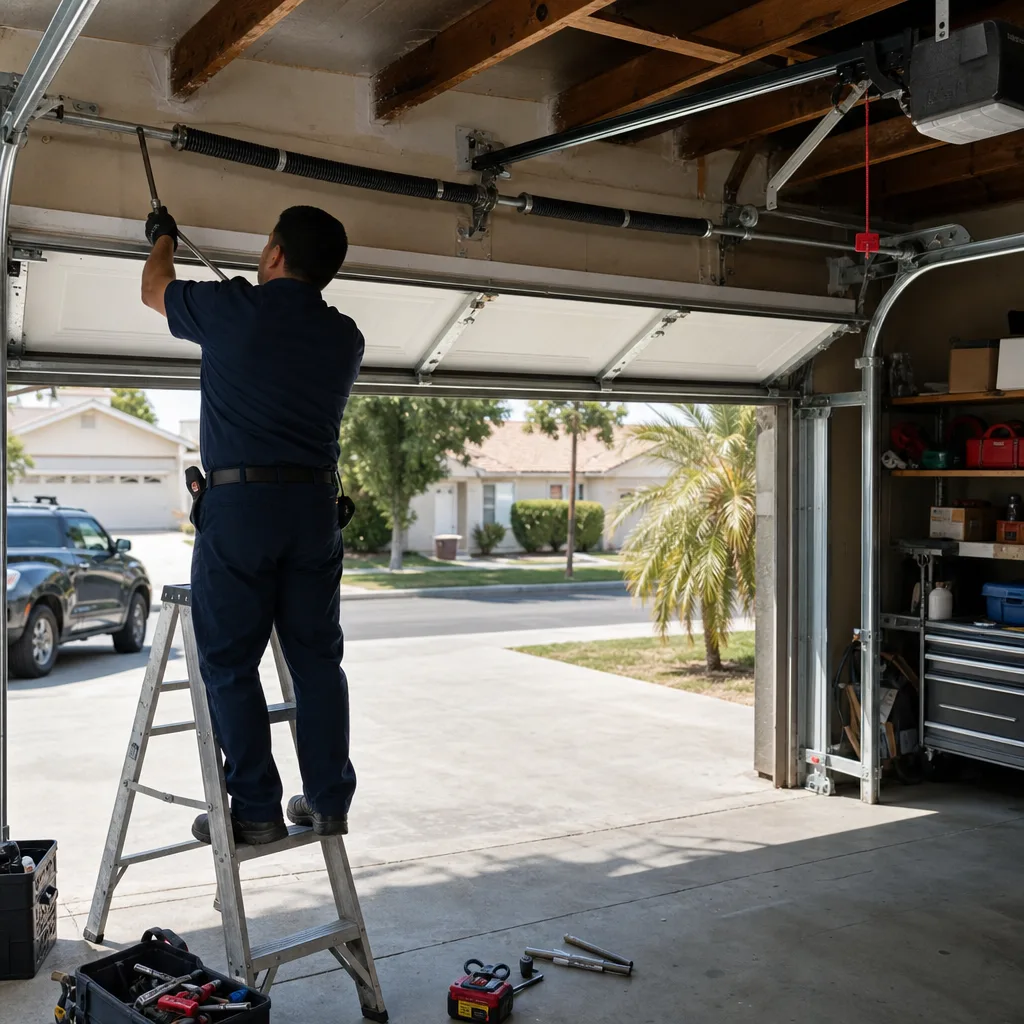
The weeks between early April and late May are the most important maintenance window of the year in Rancho Cucamonga. By June, daytime highs stay consistently above 90°F, and the thermal expansion cycle begins in earnest. What you do in April determines how your door behaves in July and August.
1. Spring Tension Check Before Expansion Cycles Begin
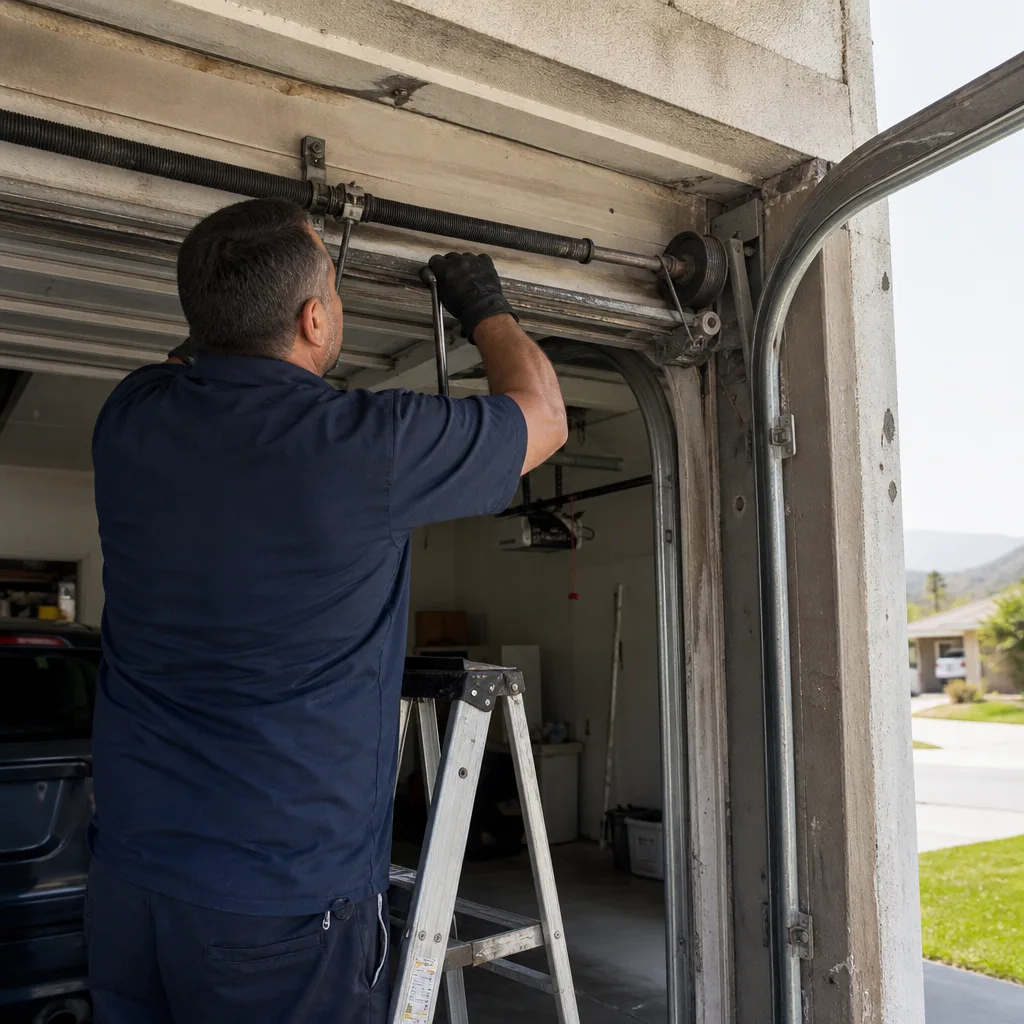
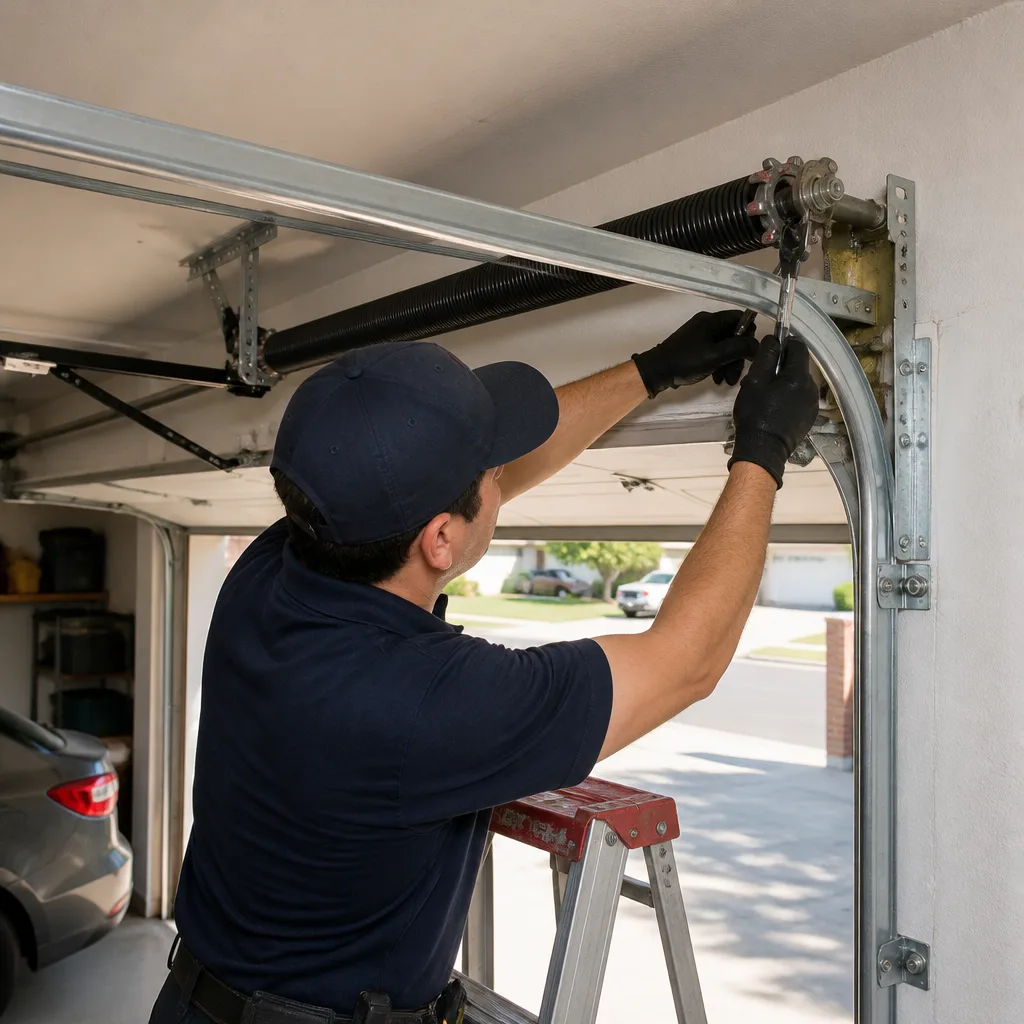
This is not a DIY adjustment. Torsion springs are under tension high enough to cause serious injury or death if mishandled. What you can do safely is observe and measure. Run the door through a full open-close cycle and watch the spring. Does it wind and unwind smoothly, or does it hesitate? A smooth rotation means the spring is holding tension evenly. A visible wobble, a gap in the coil, or a rough segment indicates the spring is nearing failure. Measure the spring’s wire diameter with a caliper if you have one. A standard residential torsion spring runs between 0.207 and 0.250 inch. If the spring on a door installed before 2018 measures at the low end of that range and has visible surface rust, budget for replacement before the July heat arrives. A new pair of torsion springs in Rancho Cucamonga typically runs $280 to $420 installed, including the springs, labor, and balancing.
Why April matters: metal expands when hot and contracts when cold. A spring with a hairline fatigue crack may hold through the mild spring months and fail suddenly during the first sustained 100°F week when the expansion stress peaks. If you catch the crack in April, you replace a spring on your schedule. If you miss it, you replace a spring plus a cable, bracket, or opener gear when the door comes down hard in July.
2. Operator Capacitor Health
The capacitor is the small cylindrical component inside the garage door opener housing that stores the starting energy the motor needs to get the door moving. Capacitors degrade with heat and age. A failing capacitor produces slow starts, a humming sound, or an opener that struggles on the first cycle of the day but works fine after that.
In Rancho Cucamonga, capacitors commonly fail during summer because the attic above the garage and the garage ceiling cavity both exceed 120°F by midafternoon. The capacitor sits in that heat for hours daily. A capacitor replacement typically costs $95 to $160 in our area, while a full opener replacement runs $350 to $650 depending on motor type and features. Testing a capacitor requires a multimeter and knowledge of safe discharge procedures, so this is a professional-check item, but you can flag the warning signs in April.
3. UV Exposure and Bottom Seal Condition
Rancho Cucamonga averages more than 280 sunny days annually. That UV exposure breaks down rubber compounds faster than most homeowners expect. The bottom seal, the flexible rubber strip along the lower edge of the door, hardens and cracks under sustained UV. Once cracked, it stops sealing against the driveway apron, and you get dust intrusion during the dry season and water intrusion during the wet season.
Check the bottom seal in April by running your hand along it and looking for cracking, flattening, or sections that no longer touch the ground evenly. A replacement bottom seal costs $85 to $185 installed, depending on door width and seal profile. This is a low-cost, high-value maintenance task that pays for itself in energy savings and dust reduction through the summer.
Santa Ana Preparation: September Through November
Santa Ana winds are the most underrated threat to garage doors in Rancho Cucamonga. These winds arrive as high-pressure systems settle over the Great Basin and push dry air down through the Cajon Pass and across the Inland Empire. Sustained winds of 25 to 35 mph are common, with gusts over 50 mph along the foothill neighborhoods of Alta Loma and Etiwanda.
What Santa Ana Winds Do to Your Door
When a strong gust hits the face of a closed garage door, the door flexes inward. A standard steel sectional door is designed to flex, but repeated flexing transfers force to weak points: the track brackets bolted to the door jamb, the cable drums at the top of the torsion shaft, and the bottom roller brackets. Over multiple wind events, these components shift. Track brackets bend slightly. Cable drums move a fraction on the shaft. Rollers start running at a slight angle in the track.
The failure most homeowners don’t anticipate is cable drum slippage. The cable drum is the grooved spool at each end of the torsion shaft where the lifting cable winds. If wind force flexes the door enough to slacken the cable momentarily while the drum is stationary, the cable can seat imperfectly in the groove. The next time the door operates, the cable winds unevenly, builds slack, and eventually jumps the drum entirely. When a cable jumps, the door hangs crooked and drops hard. This is a safety-critical failure.
Before Wind Season: What to Check
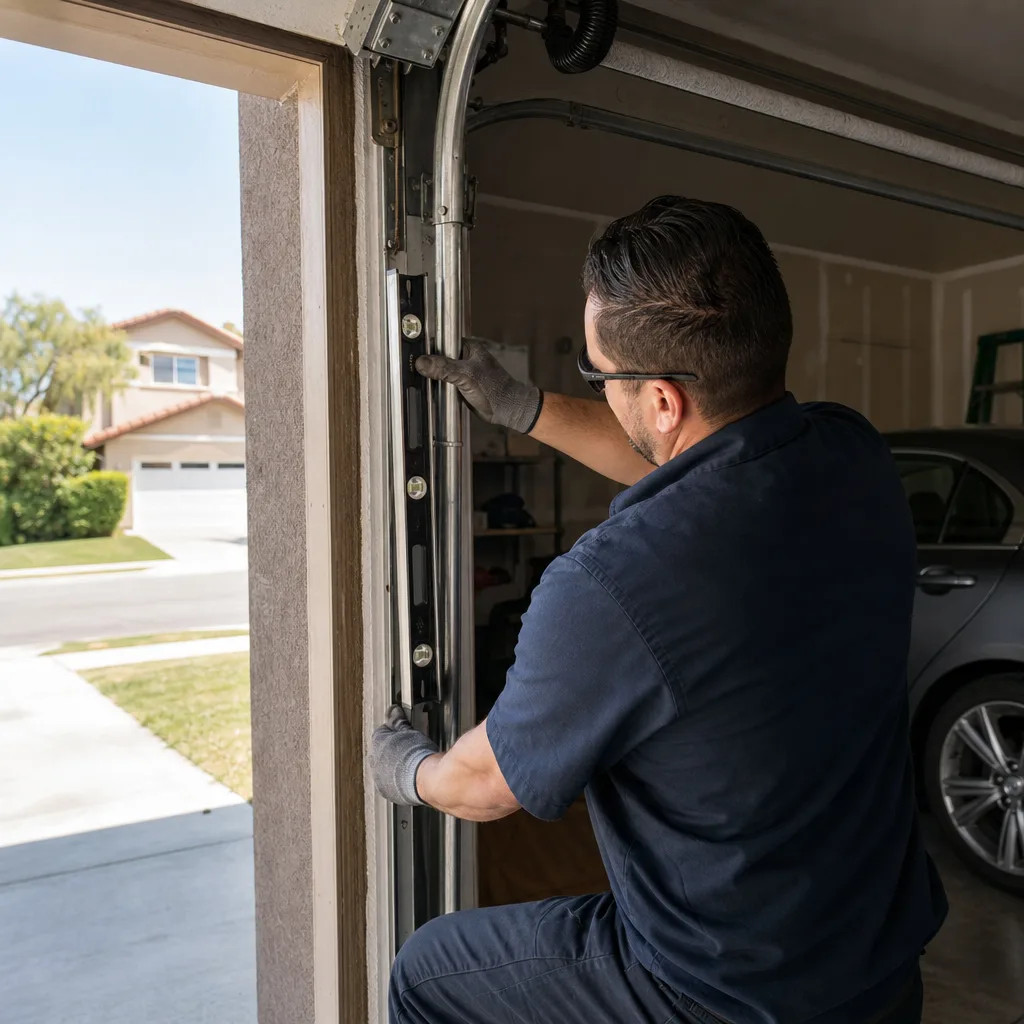
- Inspect each track bracket where it bolts to the door jamb. Look for daylight between the bracket and the jamb, or any bracket that appears angled rather than flush.
- Check both lifting cables where they wrap around the cable drums. The cable should seat in the groove with no visible fraying or flat spots.
- Push the door manually while disengaged from the opener (pull the red release handle) and feel for any binding, uneven resistance, or scraping sounds.
- Check that all roller stems are seated in their hinges and that each roller face contacts the track evenly.
After a Major Wind Event: Before Operating the Door
If a Santa Ana event brought gusts over 40 mph, do not open the door immediately. Walk outside first and check two things: the cable tension on both sides, and the track spacing. If one cable appears looser than the other, or if you hear any scraping when you manually lift the door, call for a professional inspection before running the opener. Operating a door with a compromised cable can pull the track out of the wall, turning a $150 cable repair into a $600 track replacement.
The most common wind-related repair we handle in Rancho Cucamonga between October and December is track realignment, typically $125 to $220. The second is cable reset or replacement, typically $140 to $260. Both are preventable with a pre-season bracket and drum inspection.
Wet-Season Tasks: December Through February
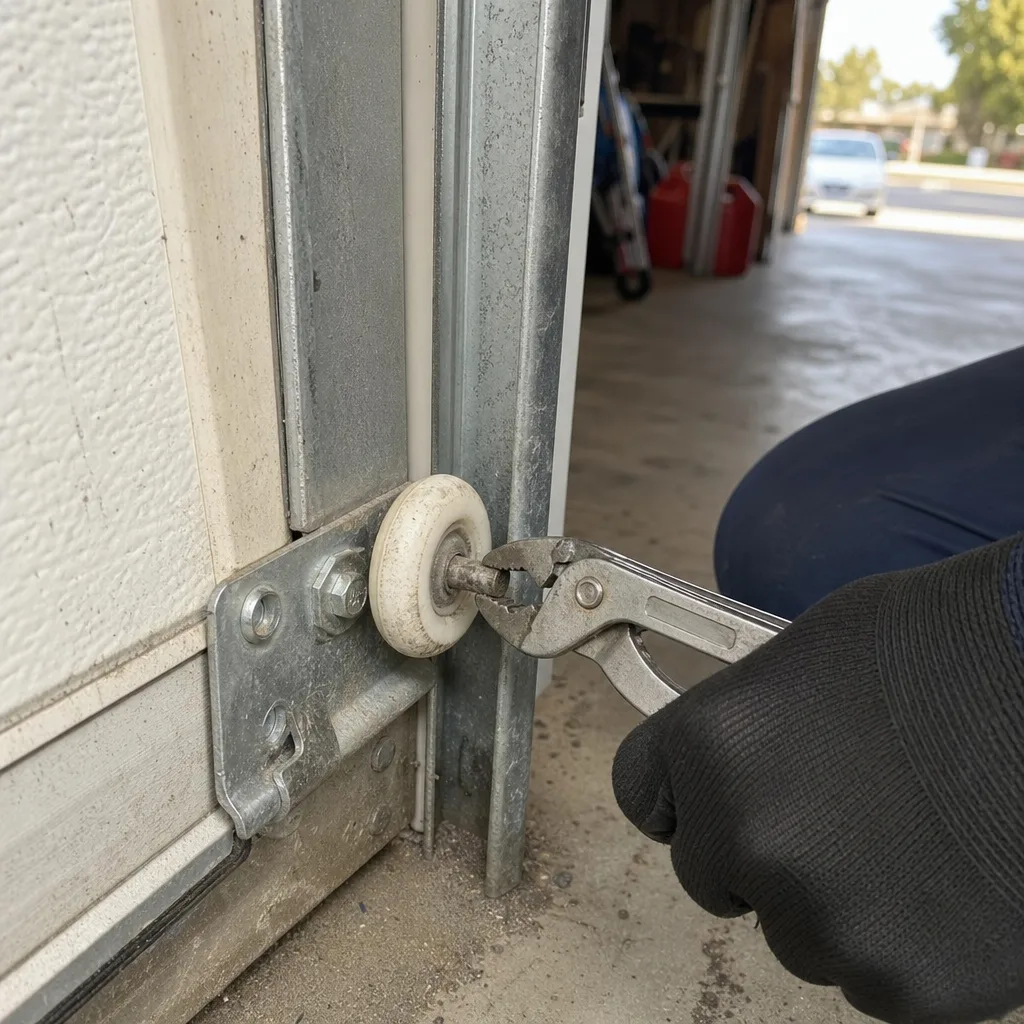
Rancho Cucamonga’s wet season is short but concentrated. Most of our annual rainfall, averaging roughly 17 to 19 inches depending on the year, falls between December and February, often in a handful of sustained storm systems. The concern for garage doors is less about direct damage and more about slow, cumulative moisture effects that surface months later.
1. Threshold Seal Integrity
The threshold seal is the strip mounted to the concrete floor where the door meets the garage slab. When it fails, rainwater that pools at the apron during storms seeps into the garage. The pooling happens because most Rancho Cucamonga driveways slope toward the garage, and older homes in neighborhoods like Caryn and Vintage Park often lack adequate apron drainage. Water that ponds against the bottom seal for hours during a winter storm will find any gap.
Check the threshold seal before December by closing the door and looking for daylight along the bottom from inside the garage with the lights off. Replace or shim the seal if you see any gap. This is a $75 to $150 fix that prevents water damage to stored items and prevents the bottom seal from rotting from inside out.
2. Track Corrosion at Anchor Points
Galvanized steel tracks resist rust, but the anchor points, the bolts and brackets where tracks meet walls and floor plates, collect moisture and eventually corrode. During the wet season, check each anchor point for rust staining, flaking, or movement. A rusted floor plate anchor can allow the track to shift a fraction of an inch, which causes roller binding and uneven door travel.
If you spot active rust, wire-brush the area dry and monitor it. If the anchor is loose or the bracket shows significant pitting, replacement is the correct fix. Anchor bracket replacement runs $85 to $145 per bracket in the Rancho Cucamonga market.
3. Rain Pooling and Bottom Seal Lifespan
Here’s a detail most guides miss: rain pooling at the apron doesn’t just cause leaks immediately. It accelerates bottom seal degradation. When the rubber bottom seal sits in standing water for hours, it absorbs moisture, and the repeated wet-dry cycle causes the rubber to lose flexibility and crack prematurely. The same seal that would last four years with proper drainage may only last two in a garage where winter rain pools regularly.
The fix is twofold: address the drainage at the apron (even a temporary sandbag redirection during heavy storms helps), and replace the bottom seal earlier than you otherwise would. The bottom seal on a standard 16-foot door in Rancho Cucamonga costs $85 to $185 installed, depending on seal profile. We replace seals all winter, and the common thread is pooling.
The Mild Window: Lubrication Timing in March and November
Lubrication is the most misunderstood maintenance task in garage door care. Most guides say to lubricate twice a year without explaining why timing matters. In Rancho Cucamonga, timing matters because of chemistry and temperature.
White lithium grease and silicone-based garage door lubricants have a working temperature range. Apply them in July when the garage is 110°F, and the carrier solvent flashes off too quickly, leaving a thicker, tackier film that attracts dust. Apply them in January when it’s 45°F, and the lubricant thickens before it penetrates into roller bearings and spring coils. The result either way is a surface coating that does little for the moving parts.
The optimal application window is when ambient garage temperatures sit between roughly 60°F and 80°F. In Rancho Cucamonga, that happens reliably in two periods: March, before the sustained heat arrives, and November, after the Santa Ana season winds down and before the wet season sets in. If you’re only going to lubricate once a year, choose November.
Step-by-Step Lubrication Sequence
- Disconnect the opener by pulling the red release handle, then run the door manually through a full cycle to identify any sticking points before lubricating.
- Use a garage-door-specific lubricant, not WD-40. A lightweight penetrating oil is acceptable for hinges, but springs and rollers need a silicone or lithium product designed to leave a stable film.
- Apply lubricant to the torsion spring first: a single steady pass along the full coil length while the door is closed.
- Next, hit each hinge pivot point. Two or three drops per hinge is enough. Excess lubricant is worse than too little because it captures dust.
- Apply a small amount to each roller bearing. If the rollers are sealed-bearing nylon rollers, skip them. If they are metal rollers with visible bearings, one drop per bearing face.
- Lubricate the top rail where the trolley rides. Use a dry film product if possible to avoid dust buildup.
- Run the door through two full cycles to distribute the lubricant, then reconnect the opener.
The total job takes 15 minutes and costs about $12 in product. Done correctly in the right seasonal window, it extends roller and spring life measurably. We see far fewer mid-summer spring failures in homes where lubrication is done consistently in March and November.
Documentation Format: What to Photograph and Record Each Season
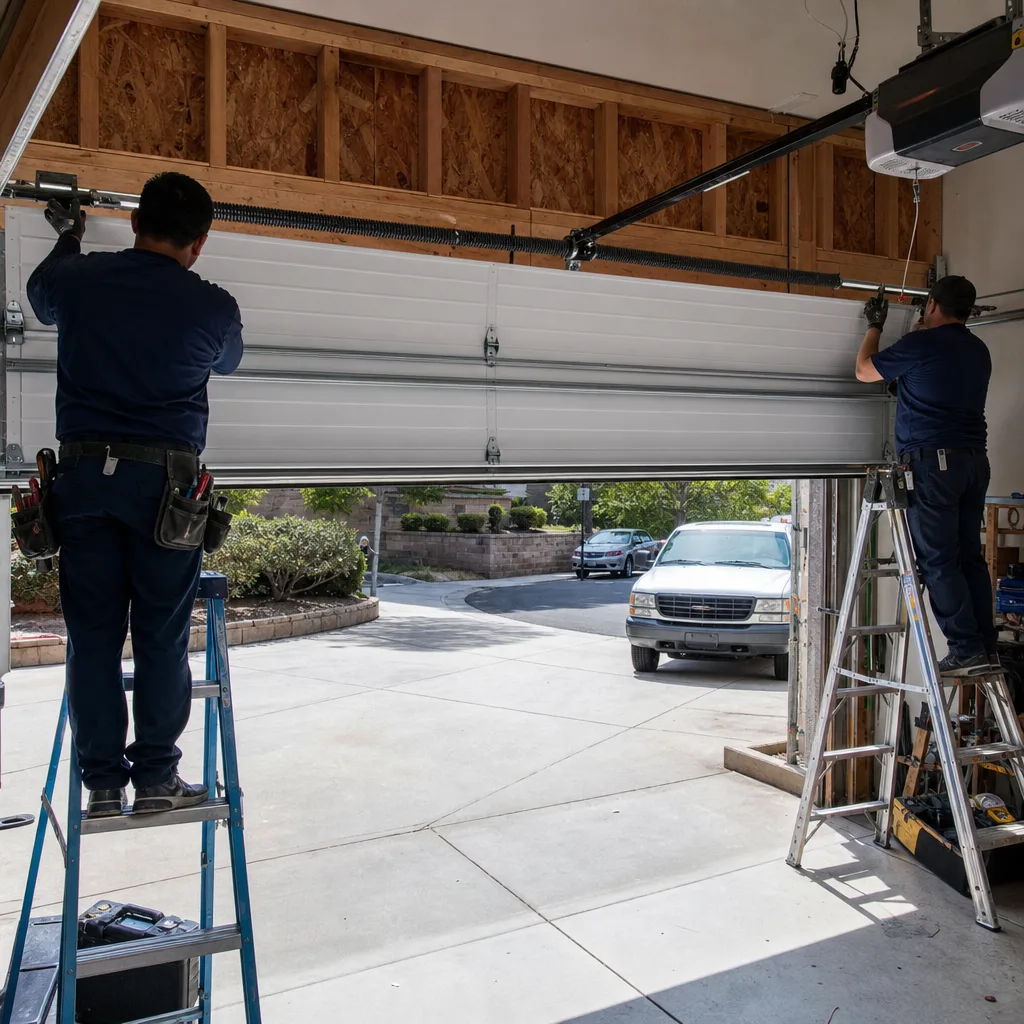
Seasonal maintenance only works if you can compare last season’s condition to this season’s. Memory fails. Photographs and measurements don’t. Here’s the documentation format we recommend, and it mirrors the documented photo record we deliver on every service visit.
Photograph Each Season
- Both torsion springs, from the same angle each time. You’re looking for coil gap changes, surface rust progression, or wear rings.
- Both lifting cables where they wrap around the cable drums.
- Each track bracket where it meets the door jamb, both sides.
- The bottom seal along its full width, with the door closed.
- The threshold seal where it meets the concrete.
- The opener rail and trolley assembly, visible from inside the garage.
Record Each Season
- Spring wire diameter, if you can measure it safely, and visual condition notes.
- Cable seating position: is the cable fully seated in the drum groove?
- Any gap between the bottom seal and the floor, measured in millimeters at the widest point.
- Door balance test result: with the opener disconnected, does the door hold position halfway up, or does it drift significantly?
- Ambient garage temperature at time of inspection, which contextualizes lubrication and seal flexibility.
Store this in a folder on your phone or cloud drive. When a technician asks whether the spring looked different last season, you’ll have the answer. Clause 4 of The Haven Standard requires that any failed component be photographed before we quote a replacement, precisely because that evidence changes what a homeowner decides to do. Applying the same discipline to your seasonal checklist gives you the same advantage.
Common Mistakes to Avoid
- Lubricating in summer. Applying lubricant to springs and hinges in July creates a tacky film that collects Rancho Cucamonga dust and accelerates roller wear. Wait for the mild window in March or November.
- Ignoring Santa Ana warnings. Homeowners treat wind as a nuisance, not a mechanical stress. After any 40-plus-mph gust event, inspect the cables and track brackets before operating the door.
- Using WD-40 as a garage door lubricant. WD-40 is a penetrating fluid and solvent, not a lubricant. It displaces existing lubrication and leaves no lasting film. Use a garage-door-specific silicone or lithium product.
- Skipping the pre-summer spring check. The most expensive garage door failures in Rancho Cucamonga happen in July and August, but the warning signs are visible in April and May. A spring inspection costs far less than a dropped door.
- Over-tightening track bolts avoid. While checking track brackets, some homeowners tighten loose bolts and strip the anchor. Track bolts should be snug, not forced, and loose anchors are usually a bracket replacement issue, not a tightening issue.
- Replacing the bottom seal without addressing apron drainage. If winter rain pools at the door, a new seal will degrade on the same accelerated timeline as the old one. Fix the pooling first, then replace the seal.
When to Call a Professional
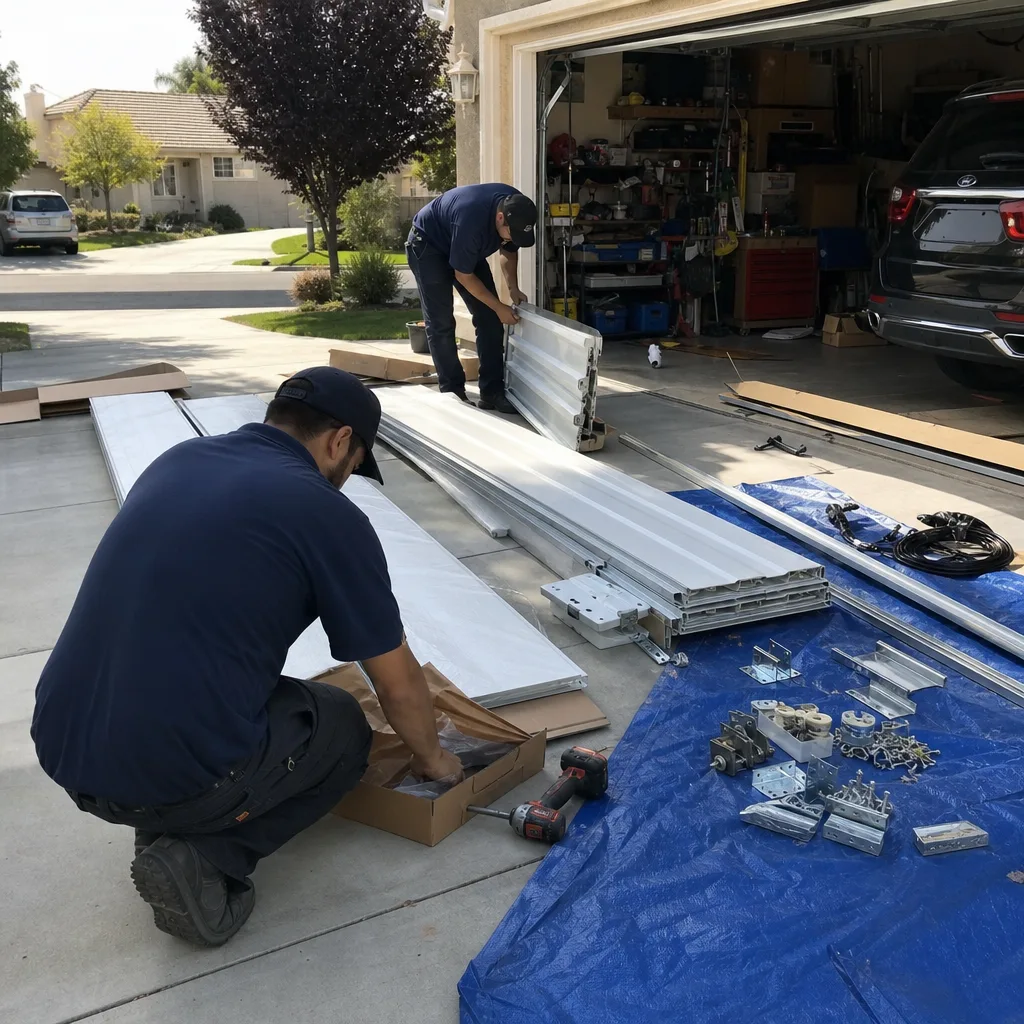
Some seasonal tasks are safe for a careful homeowner with basic tools and a phone camera. Others are not, and knowing the difference matters. Call a professional if you find a torsion spring with a visible gap in the coil or a rough rotation, a lifting cable that has jumped its drum or shows fraying, a track bracket that has shifted away from the jamb, or a door that drifts when released halfway. Adjusting torsion spring tension is dangerous and should never be attempted without the correct winding bars and experience. Reattaching a cable that has come off the drum under tension is also hazardous. For everything else, including spring inspections, capacitor testing, and track realignment, Garage Door Repair in Rancho Cucamonga offers free estimates in Rancho Cucamonga. Call (909) 498-8655.
Frequently Asked Questions
Lubricate twice a year, during the mild windows of March and November when garage temperatures sit between 60°F and 80°F. Once a year in November is acceptable if you only choose one. Call (909) 498-8655 for a seasonal maintenance visit if you’d rather not handle it yourself, or explore more guides & resources on our blog.
A torsion spring pair replacement in Rancho Cucamonga typically costs $280 to $420 installed, including the springs, labor, and door balancing. The final price is quoted in writing before any work begins. Call (909) 498-8655 for an exact quote.
Yes, and more often than rain. Sustained gusts over 40 mph flex the door and shift track brackets, cable drums, and rollers. We see more wind-related track realignments between October and December than rain-related failures all year. Inspect cable and track alignment after every major wind event.
Heat expands metal components, and dry Rancho Cucamonga air accelerates lubricant evaporation. If you lubricated in the spring and the squeak returns by July, the lubricant was likely applied in suboptimal temperatures or with the wrong product. Use a garage-door-specific lubricant during the March and November windows.
You can and should visually inspect springs seasonally, but do not attempt to adjust or replace them. Torsion springs are under lethal tension. Look for coil gaps, rough rotation, and surface rust, then call a professional if you find anything concerning. Call (909) 498-8655 for a free estimate in Rancho Cucamonga.
The mild windows of March and November are ideal for Garage Door Installation in Rancho Cucamonga because moderate temperatures make the work faster and materials easier to handle. However, installation can be scheduled year-round, and we operate in all seasons. Call (909) 498-8655 to schedule a free measure and written price.
Check whether the opener motor hums but doesn’t move the door, which indicates a capacitor or gear issue. Garage Door Opener Repair & Installation in Rancho Cucamonga addresses motor, capacitor, and logical board repairs. Don’t force the door, and keep the opener disconnected until it’s inspected.
The Bottom Line
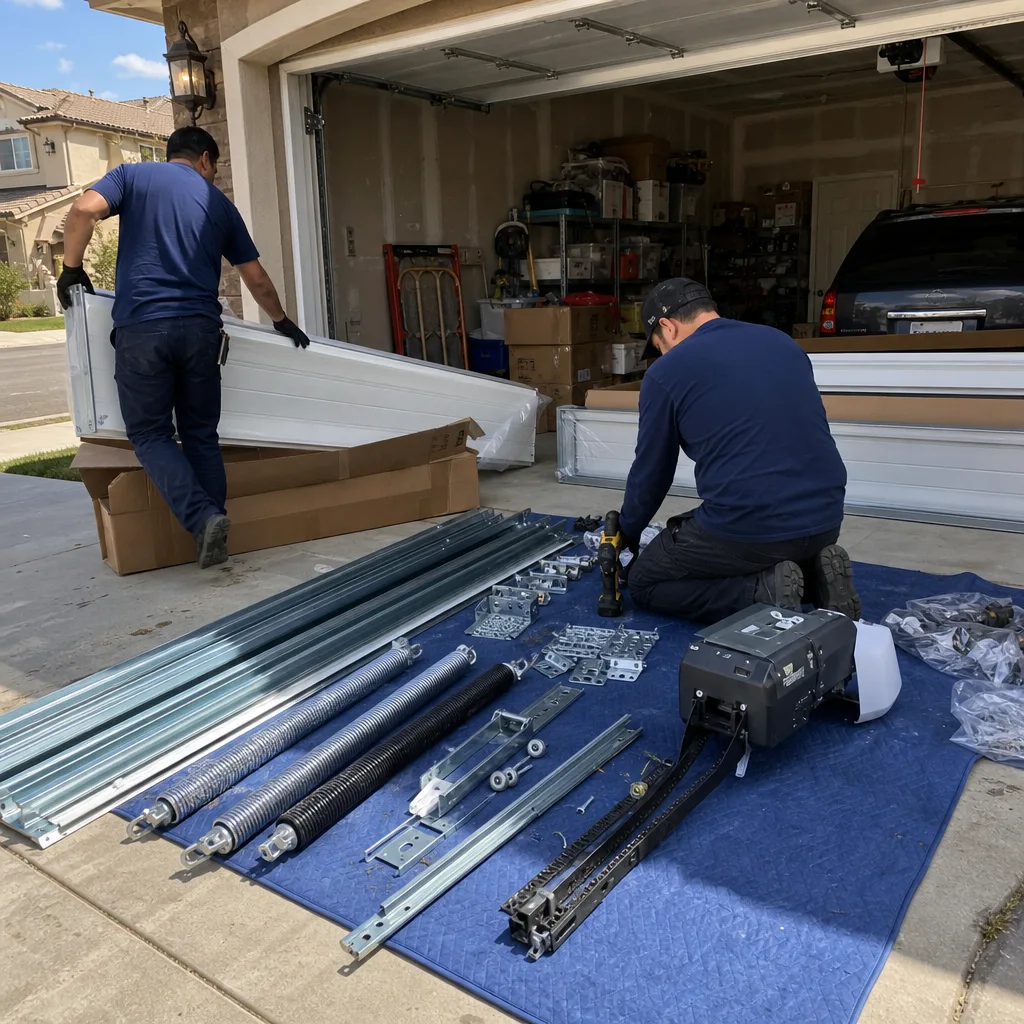
Rancho Cucamonga’s climate produces four distinct garage door stress seasons, and each has a specific maintenance response. April and May are for spring, capacitor, and seal checks before the heat expansion cycle peaks. September through November require wind-focused cable and track inspections, before and after Santa Ana events. December through February is the window for threshold seal and anchor point corrosion vigilance. March and November are the only months where lubrication chemistry works properly. Document each season with photos and measurements, and you’ll see wear coming instead of hearing the spring break. For any task beyond visual inspection, free estimates and written pricing are available from Servo Garage Doors Rancho Cucamonga at (909) 498-8655. The Servo Garage Doors Rancho Cucamonga home page has more on our documentation-first approach.
Written by Marcus Deller, Owner at Servo Garage Doors Rancho Cucamonga, serving Rancho Cucamonga since 2015.